
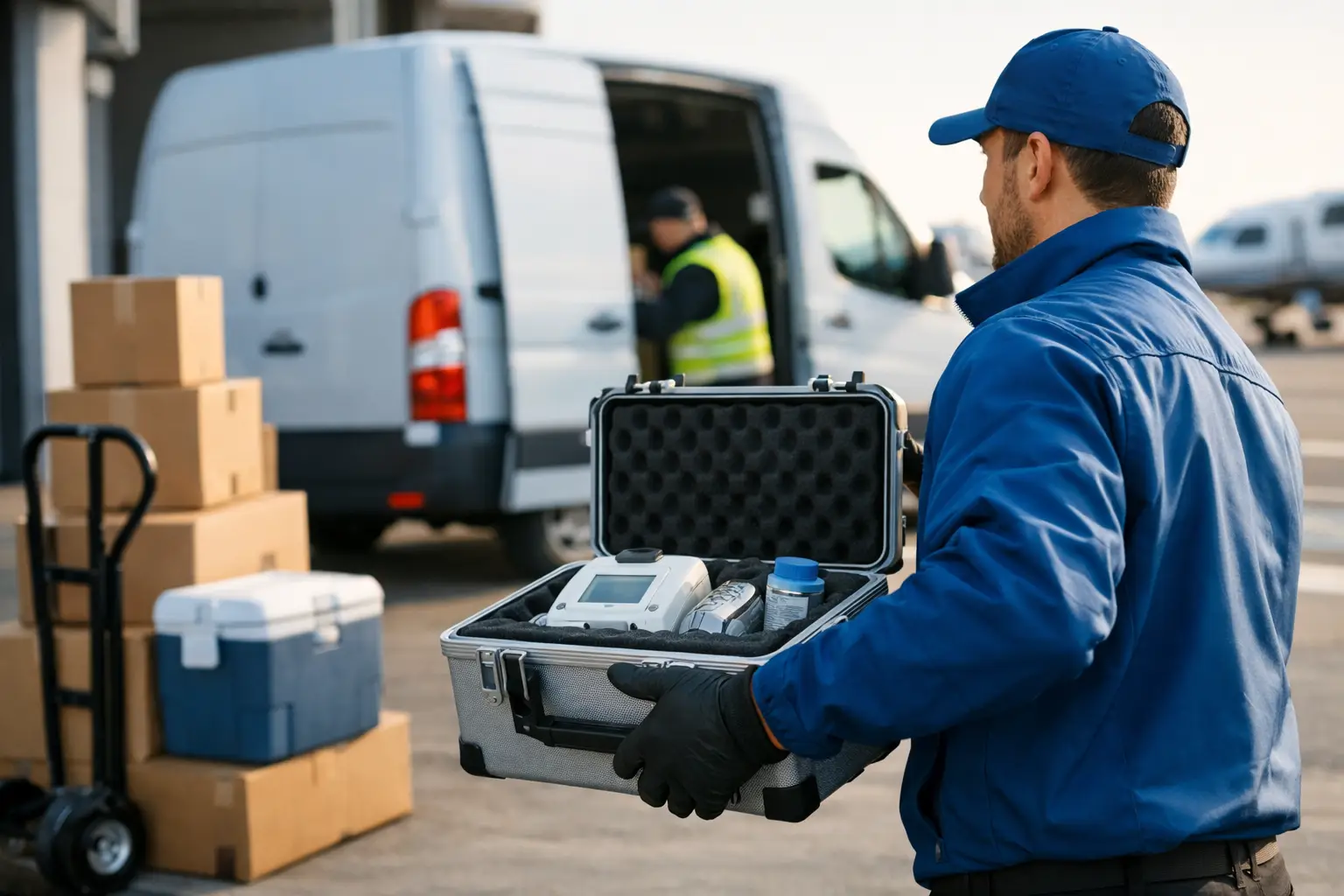
A production line stopped by one missing component. A shop fitting team waiting for display units before an overnight installation. A solicitor needing original documents delivered before a court deadline. These are the situations where specialist couriers earn their place. The job is not simply to move an item from A to B. It is to protect a deadline, a project, a customer relationship or an asset that cannot be replaced easily.
Standard parcel networks work well for routine, boxed goods that can tolerate sorting hubs, shared vehicles and delivery windows. But when a consignment is urgent, high-value, fragile, oversized or unusually shaped, those systems introduce handling stages and uncertainty that many businesses cannot afford. A dedicated courier gives the delivery its own vehicle, its own driver and its own route.
What makes a courier service specialist?
A specialist service is built around control. Rather than collecting an item into a multi-drop network, the courier assesses what is being moved, matches it to a suitable vehicle and takes it directly to the delivery point. There are no depot transfers, no other consignments piled around it and no unnecessary stops between collection and delivery.
That distinction matters most when the consequences of delay or damage are immediate. A standard network may quote a next-day service, but it cannot always promise the exact collection time, vehicle type, loading method or direct route your consignment requires. Specialist transport can be arranged around those details from the outset.
It also brings accountability. One driver takes responsibility from collection through to proof of delivery, while the transport team remains available to provide updates and deal with changes. For busy operations teams, that means less time chasing a shipment and more confidence that someone is actively managing it.
When specialist couriers are the sensible option
The value of dedicated transport is clearest when the delivery itself carries operational risk. That risk may come from time pressure, the nature of the goods or the conditions at the collection and delivery sites.
When timing cannot slip
Same-day transport is often required because the item needed to be there yesterday. Perhaps a manufacturer has a failed part, a printer has completed a late run for an event, or a construction project needs a replacement tool before the next shift. In these cases, a vague delivery window is not enough.
A specialist courier can collect immediately or at an agreed time, then travel directly to the destination. Timed and scheduled deliveries are equally useful where access is controlled, such as a retail centre, exhibition venue, construction site or secure office. The recipient knows when to expect the driver, and the sender can track progress rather than relying on a notification after the event.
When the consignment needs careful handling
Fragile goods are not always visibly fragile. Printed materials can be damaged by poor stacking, electronics can be affected by careless loading, and exhibition pieces may have awkward weight distribution despite looking straightforward in a crate. Valuable documents, prototypes and confidential materials need a different kind of protection: controlled custody.
Direct delivery reduces the number of people handling the consignment. It also allows the driver to load with the item in mind, rather than fitting it around a van full of unrelated parcels. The result is a more considered service, particularly where the cost of damage extends beyond the item itself.
When standard vehicle sizes will not work
A long length of signage, a shop display, machinery, glazing, steelwork or a palletised load may be perfectly transportable but unsuitable for a conventional parcel service. The question is not only whether it fits in a vehicle. It is whether it can be loaded, secured and unloaded safely at both ends.
Specialist transport starts with the practical details: dimensions, weight, access restrictions, loading equipment and delivery-site requirements. A small van may be right for urgent documents or compact parts. A larger van, curtain-sided vehicle, sliding-roof lorry or vehicle with a mounted forklift may be needed for larger and more complex loads. Choosing the right vehicle first prevents costly last-minute problems.
When the delivery needs a named point of responsibility
For legal firms, publishers, advertising agencies, manufacturers and fit-out contractors, the delivery is often connected to a wider chain of work. A missed delivery can mean an idle team, a delayed launch, a closed site or a disappointed client. The lowest headline price is rarely the true cost if the service cannot respond when plans change.
Dedicated transport gives the sender a clear escalation route. If the collection address changes, the receiving team is delayed or site access needs clarification, there is a person coordinating the movement rather than an automated system trying to fit an exception into a national network.
Dedicated delivery versus a multi-drop network
Multi-drop networks are designed for scale. They collect thousands of parcels, consolidate them through hubs and send drivers on routes containing many deliveries. This makes them a practical choice for routine shipments, but it also means the sender gives up a degree of control over handling order, route and timing.
A dedicated courier model is different by design. One vehicle collects one important delivery and takes it to its destination. The route is planned around your consignment, not around a delivery round. Tracking provides visibility while the load remains under the care of the same driver.
That does not mean dedicated transport is automatically the right answer for every item. Sending a low-value, non-urgent box through a standard network can be more economical. The decision should reflect what is at stake. If the item can be delayed, replaced cheaply and safely moved through several depots, a parcel service may be suitable. If it cannot, direct transport is the safer commercial decision.
What to tell your transport consultant
The quality of a booking depends on the information shared at the start. There is no need for logistics jargon, but clear facts help the courier make the right recommendation and avoid preventable delays.
Provide the collection and delivery postcodes, the item dimensions and approximate weight, plus whether it is boxed, palletised, loose or particularly delicate. Explain the deadline and whether it is a strict timed delivery. It also helps to mention loading access, stairs, height restrictions, forklift availability, booking-in requirements and the recipient’s contact details.
For unusual consignments, photographs can be useful during the planning stage. An item that sounds manageable on paper may need a different loading approach once its shape, centre of gravity or packaging is understood. Being open about these details protects the consignment and helps ensure the correct vehicle arrives first time.
The role of vehicle choice and trained drivers
The vehicle is part of the service, not an afterthought. An urgent envelope does not require the same resource as a large display unit or an industrial component. Using an oversized lorry for a small consignment can add unnecessary cost, but using a vehicle that is too small can create loading risks, delay collection or leave the goods inadequately secured.
A capable operator maintains a varied fleet and advises on the practical match. That may mean a car-derived van for documents, a long-wheelbase van for larger goods, or a 26-tonne lorry for substantial loads. Specialist features, including sliding roofs and mounted forklifts, can make a major difference where site equipment is limited or top loading is required.
Drivers matter just as much. They are the person representing your business at collection and delivery, often in pressured circumstances. Trained drivers understand safe loading, secure restraint, communication with site staff and the importance of obtaining clear proof of delivery. Their care protects both the load and your reputation.
Building a dependable delivery arrangement
Businesses with recurring urgent or non-standard transport needs benefit from treating courier support as part of their operation, rather than a last-minute emergency purchase. An account arrangement can make it easier to share regular collection details, preferred contacts, delivery expectations and common vehicle requirements.
This does not remove the need to assess each job. A regular route can still face traffic disruption, restricted delivery times or a different load profile. However, a courier that already understands your business can respond faster and offer advice based on how your goods actually move.
Redhead Couriers supports organisations across Essex, Suffolk, London and the UK with dedicated same-day and scheduled transport, using owned and operated vehicles suited to deliveries that need closer control. The aim is straightforward: tracked, safe movement with a clear point of responsibility from collection to completion.
When a delivery carries a fixed deadline, a high-value asset or a risk that cannot be passed down a parcel network, start by explaining the job in full. The right specialist service will ask the practical questions, recommend the right vehicle and give your consignment the direct attention it deserves.