
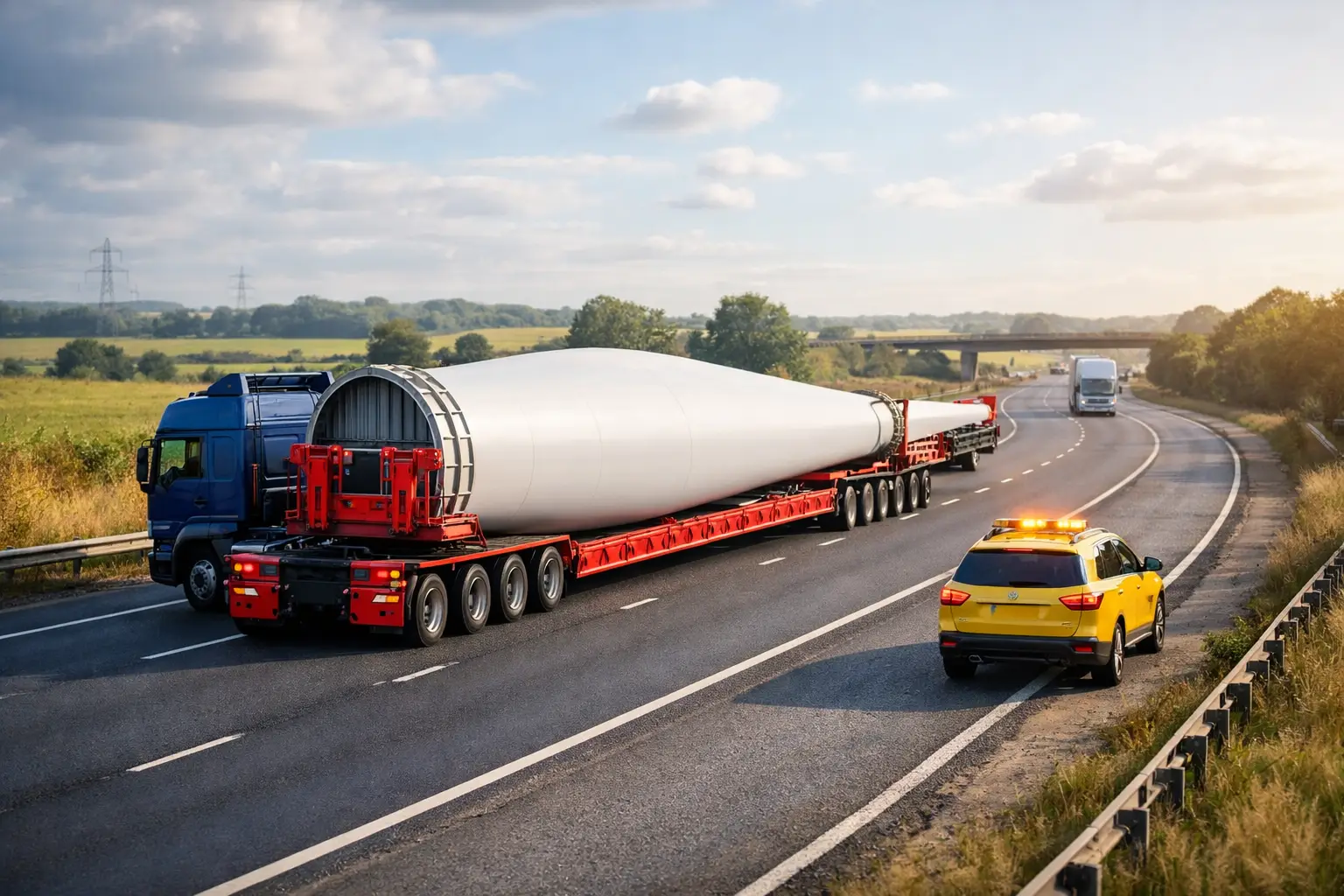
A consignment can fit inside a building yet still be impossible to move on an ordinary courier vehicle. A wide shopfront panel, long steel section, machinery crate or exhibition stand may exceed oversized freight limits long before it reaches its final destination. The issue is not simply finding a bigger vehicle. It is making sure the load, route, loading method and delivery site all work together – safely and on time.
For urgent business deliveries, a wrong assumption about size can mean an aborted collection, a missed installation slot or costly damage. That is why oversized transport should be planned around the actual item, not a rough estimate or the vehicle that happens to be available.
What oversized freight limits actually mean
Oversized freight limits describe the practical and legal boundaries that affect what can be carried on UK roads. They cover more than the physical dimensions of the load. Vehicle width, length, weight, axle loads, rear overhang, load security and route restrictions can all determine whether a consignment can travel normally or needs special arrangements.
A standard vehicle has set construction and use limits. For example, the maximum width for most vehicles is generally 2.55 metres, while vehicle length limits vary by type. A rigid lorry is commonly limited to 12 metres and an articulated vehicle to 16.5 metres. Maximum permitted weight also depends on the vehicle configuration, axle spacing and number of axles. A typical articulated combination may operate at up to 44 tonnes where the required conditions are met.
These figures are useful reference points, but they are not a booking checklist. The dimensions of the vehicle are only one part of the decision. A load projecting beyond the body, a tall crate, an awkward centre of gravity or a difficult unloading point can create constraints even when the overall load appears compliant.
Height is a good example. There is no single universal legal maximum vehicle height in the same way there is for width, but that does not make height unrestricted. Low bridges, overhead cables, tree cover, building canopies and site entrances must all be assessed. A load that clears the open road may still be unable to enter a customer’s yard.
When a load becomes abnormal
An abnormal indivisible load is a load that cannot be divided into smaller loads for transport without disproportionate expense, risk of damage or unreasonable time. It may exceed normal statutory limits for weight, width, length or projection.
Once a load moves beyond standard limits, additional controls may apply. Depending on its size and weight, this can include notifying police, highway authorities or bridge owners, arranging a route survey, using warning markings or providing an escort. The exact requirement depends on the dimensions, gross weight and route, so it must be confirmed for the specific job.
This is where experienced transport planning matters. Sending an unsuitable vehicle towards a restricted bridge or narrow industrial estate is not a minor inconvenience. It can leave a valuable item stranded and disrupt everyone waiting for it on site.
Width and side projection
Wide loads require particular care because road space changes quickly. A route that looks suitable on a map may include traffic islands, tight roundabouts, parked vehicles, temporary roadworks or narrow access lanes. Side projection must be visible, correctly marked where required and protected from avoidable contact.
For construction materials, shop fitting components and fabricated items, it is also worth checking whether the stated width includes protective packaging. Foam corners, timber frames and transit stillages can add crucial centimetres.
Length and rear overhang
Long items such as pipes, aluminium sections, timber, glazing frames and display structures may need a flatbed, curtain-sided vehicle or a specialist body. The concern is not only whether the item fits on the bed. It must be supported correctly, secured against movement and positioned so that any overhang is lawful and clearly managed.
A long but lightweight load can be just as challenging as a heavy one. If it is insufficiently supported, road vibration can cause bending, cracking or surface damage before it arrives.
Weight and axle loading
A vehicle can be below its overall gross weight limit while still being unsafe or unlawful because too much weight sits over one axle. Dense machinery, stone products, paper stock and metal components need careful positioning to distribute the load properly.
Loading equipment also affects the calculation. A mounted forklift, tail-lift, pallet truck, stillages and securing equipment all add weight. This is one reason a clear consignment description is far more useful than a single total weight figure.
The measurements your transport provider needs
For an oversized consignment, accurate information protects the delivery from the outset. Provide the length, width and height of the item once packed, along with its weight. Photographs are valuable, especially where the shape is unusual, the item is fragile or lifting points are not obvious.
Your transport provider should also know whether the item can be loaded by forklift, whether it needs a sliding roof, and whether it can be secured by straps without damage. State if it must remain upright, cannot be stacked, has a high centre of gravity or needs two people to handle it safely.
The delivery address deserves the same attention. Confirm the access road, gate width, vehicle height clearance, unloading space, site opening hours and the name of the person receiving the goods. A city-centre installation, an active construction site and a rural property can each require a different approach.
Match the vehicle to the job, not the parcel network
Standard parcel and pallet networks are designed for repeatable freight moving through depots, hubs and multi-drop routes. That model works well for ordinary consignments. It is less suitable for valuable, time-critical or unusually shaped items that need direct control.
Oversized freight often benefits from a dedicated vehicle. One vehicle collects the item, carries it directly to its destination and remains responsible for it throughout the journey. There are no unnecessary depot transfers, no sorting belts and no additional handling by unfamiliar teams.
The right solution may be a long-wheelbase van for a bulky but moderate-weight item, a Luton with a tail-lift for crated equipment, or a 7.5-tonne, 18-tonne or 26-tonne lorry for larger loads. Flatbeds, sliding-roof vehicles and lorries with mounted forklifts can solve loading and unloading problems that a standard enclosed van cannot.
The biggest vehicle is not automatically the best choice. Larger vehicles can be restricted by access, urban delivery windows, parking conditions and site space. A properly measured load on the right vehicle is often safer, faster and more cost-effective than over-specifying the transport.
Safe loading is part of the delivery
An oversized item is not protected merely because it has been strapped down. The securing method must suit the item and the journey. Fragile surfaces may need edge protection, timber packing, anti-slip materials or purpose-built stillages. Machinery may need blocking and bracing. Items that cannot tolerate weather may need an enclosed body, even if a flatbed would offer easier loading.
Drivers also need clear instructions. They should understand what they are carrying, where it is vulnerable, who will receive it and whether there are site-specific requirements. For high-value or delicate freight, real-time tracking and direct communication offer useful reassurance when deadlines are tight.
Redhead Couriers plans dedicated transport around these practical details, from vehicle matching and trained-driver handling to tracked, direct delivery. That approach gives businesses a clear chain of responsibility from collection through to proof of completion.
Do not leave route planning until collection day
The road route is only part of the journey. Collection and delivery access can be the real constraint. A lorry may be able to reach the postcode but not turn into the estate. A vehicle with a mounted forklift may be ideal for unloading, but the site surface must support it. A loading bay may be available, but only during a fixed time slot.
For critical deliveries, assess these points before dispatch. Check whether the route has height, weight or width restrictions; whether roadworks affect access; whether timed restrictions apply; and whether there is a safe place to unload without blocking traffic. If permissions or notifications are needed, allow time for them rather than treating them as an afterthought.
When a load is oversized, the safest question is not Can someone collect this? It is What will this consignment need to arrive 100% safe, at the agreed time, and ready for use? A dedicated Transport Consultant can turn that answer into a vehicle, route and handling plan before the clock starts.