
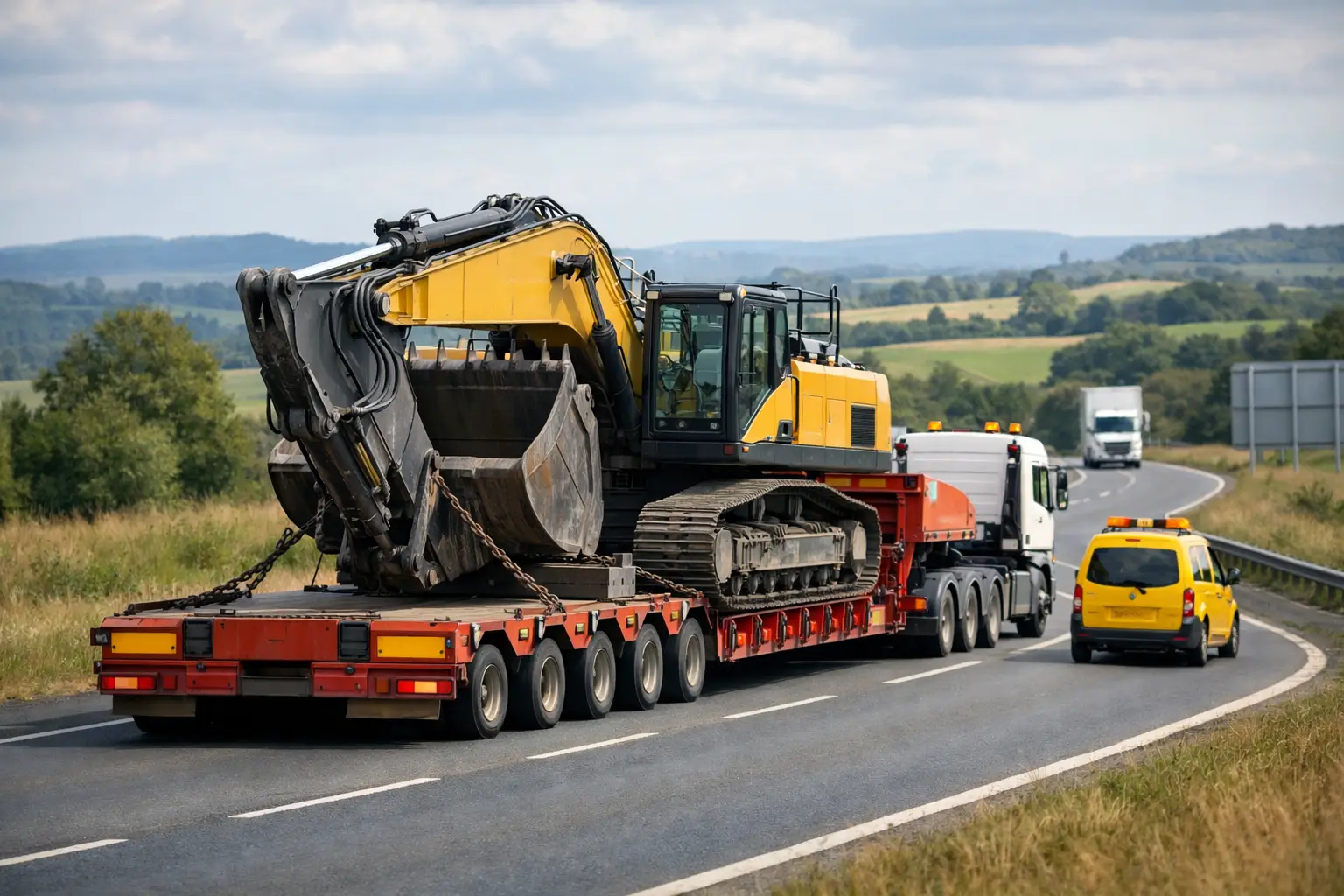
A production line can be held up by one missing machine, one replacement part or one piece of equipment that arrives damaged. Knowing how to ship oversized machinery is therefore about far more than finding a vehicle with enough space. It means planning the lift, matching the vehicle to the load, checking the route and keeping control of the consignment from collection to delivery.
For machinery that is urgent, high-value or difficult to handle, a dedicated transport service removes the uncertainty of depot transfers and multi-drop schedules. One vehicle collects your equipment and takes it directly to the delivery point. Tracked. Safe. On time.
Start with an accurate machinery assessment
The most useful transport plan starts with clear information. Before booking collection, measure the machinery at its widest, tallest and longest points, including protruding controls, guards, pipework, crates and any packaging. Record the total weight too, rather than relying on an estimate or a product brochure.
Dimensions determine whether a long-wheelbase van, curtain-sided vehicle, flatbed or 26-tonne lorry is suitable. Weight affects the payload available, the loading method and how the item must be secured. An awkwardly shaped machine may fit within a vehicle’s internal dimensions but still need a different solution because it cannot be safely manoeuvred through rear doors.
Provide photographs from several angles where possible. They help a transport consultant identify lifting points, assess the centre of gravity and spot vulnerable areas before a vehicle arrives. This is especially valuable for machinery with exposed motors, screens, wiring looms or precision components.
You should also confirm whether the equipment is operational, drained, disconnected and ready to move. Fuel, oils, hydraulic fluids and loose accessories can create avoidable handling and safety issues. If a machine needs dismantling, arrange this with a qualified engineer before collection unless the transport plan specifically includes specialist assistance.
Choose the vehicle around the load, not the other way round
Oversized does not always mean exceptionally heavy. A large-format printer, shop-fitting unit or industrial cabinet can be light enough for a van but too tall, long or fragile for a conventional parcel network. Conversely, a compact machine tool may require a lorry because of its concentrated weight.
The right vehicle depends on the equipment and the collection and delivery sites. A vehicle with a sliding roof may be the practical choice when a crane must load machinery from above. A mounted forklift can help at sites without their own forklift, provided the ground conditions and access are suitable. For a heavy item that needs loading from the rear, a tail-lift vehicle may be appropriate, but only if the lift capacity and load dimensions are confirmed in advance.
This is where standard courier services often fall short. Parcel and pallet networks are designed for repeatable freight moving through hubs, conveyors and multiple vehicles. Oversized machinery usually needs a controlled handling plan, not another label and a collection window.
A dedicated vehicle also protects the load from unnecessary movement. There are no sorting depots, shared trailer changes or other deliveries to work around. Your machinery is collected, secured and transported directly to its destination by a trained driver.
How to ship oversized machinery with a safe loading plan
Loading is often the point at which damage occurs. The vehicle may be correct, but an unsuitable lift, poor weight distribution or rushed restraint can put the machinery and people around it at risk.
A proper plan considers who is responsible for loading, what equipment is available on site and where the machine will sit in the vehicle. Forklift tines must be suitable for the load and placed at approved lifting points. If slings, chains or crane lifting are required, they should be used by competent personnel following the manufacturer’s guidance.
Once loaded, machinery should be restrained for the journey using appropriate rated straps, chains, blocking and protective materials. The aim is not simply to stop it falling over. It must be prevented from shifting under braking, cornering and uneven road surfaces, without placing damaging pressure on delicate panels or working parts.
Keep any transit bolts, protective covers and original packaging in place where practical. If the machine is being moved after installation, protect exposed connections and secure removable components separately. A few minutes spent preparing the equipment properly can prevent days of downtime at the other end.
Check access and the route before collection
A direct delivery can still fail if the vehicle cannot reach the loading bay, factory entrance or final unloading point. Ask both sites about gate widths, height restrictions, overhead cables, parked vehicles, turning circles and the availability of a safe unloading area.
Access questions matter just as much in central London as they do on a rural construction site. Low bridges, weight restrictions, roadworks and timed delivery rules can affect the route and vehicle choice. London work may also require consideration of ULEZ requirements, while larger or unusual loads can need additional route planning or permits.
For machinery that exceeds normal width, length or weight limits, the move may fall under abnormal load requirements. That does not automatically make transport impossible, but it changes the planning process. Notifications, route surveys, escort arrangements and delivery times may be needed. Raise this early rather than assuming a large vehicle can simply arrive when required.
It also pays to agree a named contact at each end. The collection contact should be ready to release the machinery and answer technical questions. The receiving contact needs to confirm access, unloading equipment and the precise handover location. A signed proof of delivery is useful, but a successful handover begins well before the driver reaches the site.
Build timing around the real operational deadline
Urgent machinery transport is rarely urgent for its own sake. It is usually tied to an engineer waiting on site, a production restart, a fit-out deadline or a customer commitment. Give the transport provider the real deadline, not just the time you would ideally like the equipment delivered.
Same-day collection and direct transport can be the right answer when downtime is already costing money. For less urgent moves, scheduled delivery may offer more flexibility around site labour, crane availability or restricted access times. The trade-off is simple: the tighter the deadline and more specialised the handling, the earlier detailed information should be shared.
Tracking and direct communication also make a practical difference. Operations teams should not have to chase a generic network for an update while an installation crew waits. A dedicated transport service gives you a clear point of accountability and visibility throughout the journey.
Keep documentation with the consignment
Machinery often travels with documents that are as necessary as the equipment itself. These can include operating manuals, service records, calibration certificates, asset details, delivery notes and site-specific instructions. Keep them protected and clearly identified, but avoid attaching loose paperwork where it can be damaged or separated during loading.
Where the machine has a serial number or an existing condition report, record it before collection. Photographs of the item in its prepared state provide a useful reference for valuable or sensitive equipment. This is not about creating paperwork for its own sake. It gives everyone clarity about what was collected and how it was handed over.
For repeat movements, create a simple transport brief covering dimensions, weight, handling restrictions, contacts, preferred vehicle type and typical access conditions. It saves time on future bookings and reduces the risk of a critical detail being missed when a job becomes urgent.
Use dedicated transport when the consequences are high
There is a place for pallet freight when machinery is standard-sized, securely crated, non-urgent and suitable for network handling. But if the item is oversized, fragile, time-critical or essential to an active project, dedicated transport is usually the safer decision.
Redhead Couriers provides direct, one-vehicle transport for machinery and other difficult consignments across the UK, with vehicle options from vans to 26-tonne lorries. The focus is straightforward: match the vehicle and handling plan to the job, collect without delay and keep the consignment under controlled care until completion.
Before your next move, take the time to share the measurements, photographs, access details and real delivery deadline. The right plan gives your machinery the attention it needs long before the vehicle is on the road.