
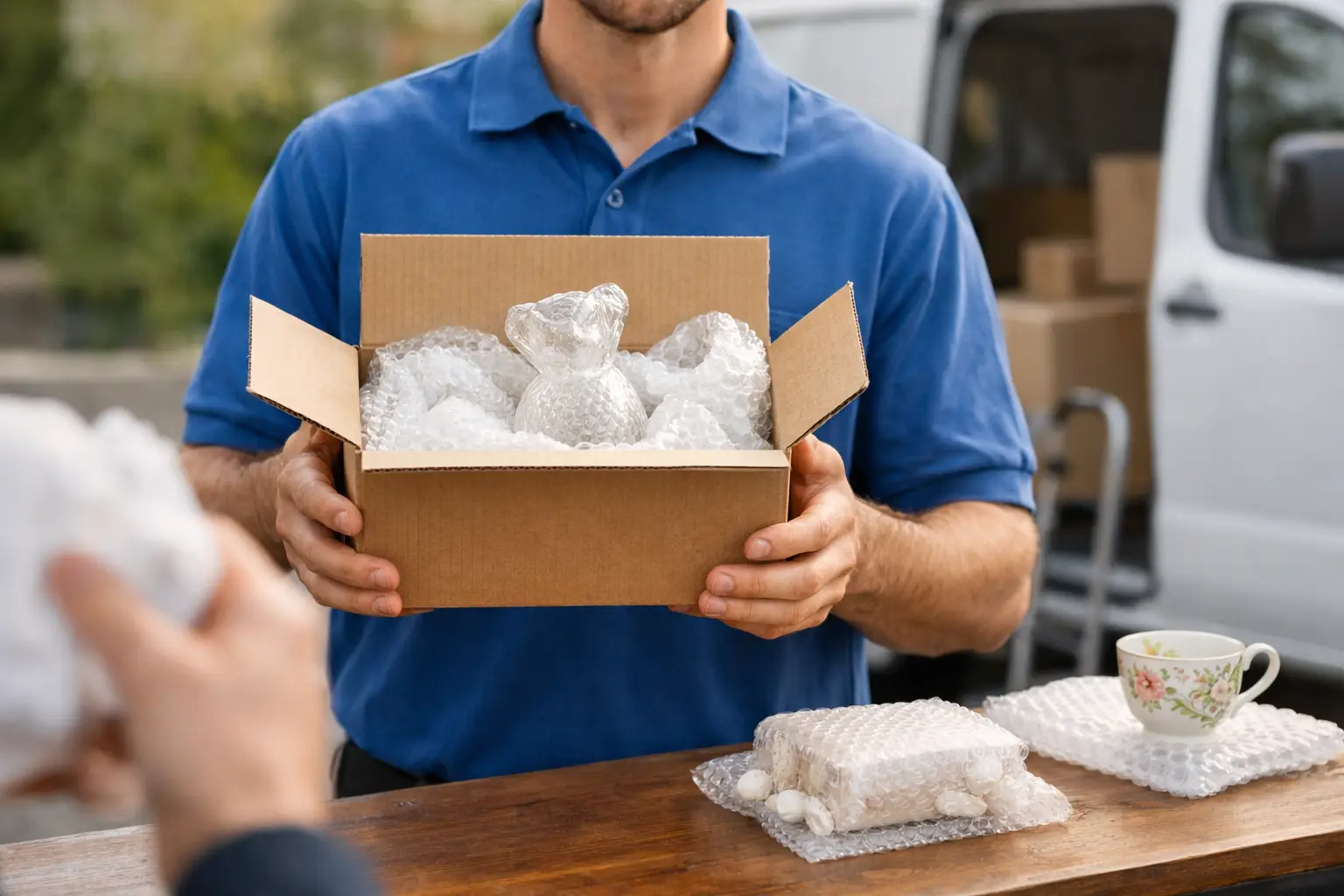
A framed artwork arriving with cracked glass. A precision-made component delayed at a depot. A retail display sent to the wrong site on the morning of a launch. These are not minor delivery problems. They can halt work, disappoint a client and create avoidable replacement costs. A fragile item delivery courier should provide more than a vehicle and a collection slot. It should give you control over how your consignment is handled, where it travels and when it reaches the person waiting for it.
For valuable, delicate or awkward items, the safest journey is usually the simplest one: collected by a trained driver, secured in the right vehicle and taken directly to the delivery address. No sorting hub. No conveyor belts. No unplanned transfers between vehicles.
What a fragile item delivery courier should do differently
Standard parcel networks are designed for volume. They work well for routine boxed items that can tolerate automated sorting, multi-drop routes and several handling points. Fragile consignments often cannot. Even strong packaging has limits when an item is repeatedly loaded, stacked, moved through depots and carried alongside hundreds of other parcels.
A dedicated courier service uses one vehicle for one important delivery. Your item is collected and transported directly to its destination, with the same driver or dedicated transport team responsible throughout. That removes the major risk points that come with a network model: depot transfers, repeated unloading and uncertainty over who has physical control of the consignment.
This approach is particularly useful for glass, artwork, antiques, exhibition materials, bespoke furniture, sensitive equipment, prototypes, printed materials and replacement parts. It also suits consignments that are high-value, unusually shaped or needed at a precise time. Fragility is not always about the material. An item may be perfectly durable but commercially fragile because a delay would stop a production line or miss a client deadline.
Direct transport reduces unnecessary handling
Every handling stage introduces a decision: where an item is placed, what is stacked beside it, whether it is secure and whether the person moving it understands its requirements. A direct service limits those stages from the outset.
The driver should assess the consignment at collection, load it carefully and secure it appropriately for the vehicle and journey. That might involve protective blankets, straps, load restraint, a clear position within the load space or a vehicle chosen specifically for the item’s dimensions. A tall display unit needs different consideration from a crated machine part, just as a framed canvas needs a different approach from a fragile retail fixture.
Vehicle matching matters. Sending an item in a van that is too small can lead to poor positioning and rushed loading. Choosing a vehicle that is unnecessarily large may increase cost without adding practical value. A capable transport provider will ask the right questions before collection: dimensions, weight, packaging, access restrictions, collection and delivery times, value, and any particular loading or unloading needs.
For larger or non-standard consignments, options such as a Luton van, curtain-sided vehicle, sliding-roof lorry or a vehicle with a mounted forklift can make the difference between a controlled delivery and an improvised one. If access is tight, the vehicle must be practical for the destination as well as suitable for the load.
Timing is part of protecting the item
Urgency changes the risk calculation. If a replacement component is needed at a construction site before work can continue, waiting for a next-day network service may be more costly than arranging a same-day dedicated vehicle. If a shop fitting team needs display materials before an overnight installation, a timed delivery can protect the programme as much as the goods themselves.
A fragile item delivery courier should be able to arrange immediate collection where required, while also offering scheduled and timed deliveries for planned work. The key is certainty. You need a realistic collection time, a clear delivery plan and communication if site conditions or traffic affect the journey.
Real-time tracking gives operational teams the visibility to prepare for arrival. It also reduces the familiar chase for updates when a consignment is time-sensitive. For private customers, it provides reassurance that a valuable item is moving directly towards its destination rather than disappearing into a general parcel network.
Packaging still matters, even with a dedicated courier
Dedicated transport is not a substitute for suitable packaging. It is an extra layer of protection that ensures good packaging is not undermined by unnecessary handling. The best approach depends on the item, its value and how it will be loaded.
For boxed items, use internal cushioning that prevents movement rather than simply filling empty space. For glass, framed pieces and polished surfaces, protect corners and faces from abrasion as well as impact. Items on pallets should be stable, wrapped where suitable and secured so they cannot shift. If an item cannot be boxed, tell the courier before booking. The transport plan may need blankets, specialist restraint or a particular loading method.
It is also sensible to photograph high-value items before collection and record any existing marks or damage. This is not about expecting a problem. It is about having a clear condition record and ensuring everyone understands what is being collected. Accurate descriptions are equally useful. A driver cannot protect against a handling risk they have not been told about.
Questions to ask before booking
Price matters, but the lowest quote does not always represent the lowest risk. Before choosing a provider, establish whether the service is genuinely dedicated or whether your consignment will join a multi-drop route. Ask how many times it will be handled, whether the vehicle is suitable for its size, and how it will be secured in transit.
You should also confirm collection availability, the required delivery time, tracking arrangements and proof of delivery. For a fragile item, a signed handover is often preferable to leaving goods unattended at a reception desk, loading bay or doorstep. Where delivery access is complicated, provide the relevant details early: floor level, lift availability, booking-in procedures, site contacts, restricted roads and unloading equipment.
The right courier will not treat these questions as obstacles. They are the information needed to make the delivery safe and on time. A good transport consultant will be practical about trade-offs too. A smaller van may be ideal for restricted urban access, while a larger vehicle may be essential for safe loading. A timed delivery may need an earlier collection to allow for traffic and site requirements.
When dedicated delivery is the better choice
Not every fragile item needs a same-day vehicle. A well-packed, low-value item with a flexible delivery window may be suited to a specialist parcel service. Dedicated transport becomes the stronger option when the consequences of damage, delay or poor communication are high.
It is particularly valuable when a consignment is irreplaceable, needed for a fixed appointment, too large for normal parcel channels or too delicate to tolerate multiple touches. It is also the sensible choice when you need a direct collection from Essex, Suffolk or London to anywhere in the UK, with a clear line of responsibility from start to finish.
Redhead Couriers provides that accountable model: a suitable vehicle, trained driver, direct route and tracked progress for consignments that cannot be left to chance. Whether the item is a single urgent part or a full vehicle load, the transport plan should fit the job rather than force the job into a standard service.
The most useful next step is to describe the item exactly as it is, not as a generic parcel: its dimensions, condition, deadline, collection point and destination. With the right details in hand, a specialist courier can protect the delivery before the vehicle even arrives.