
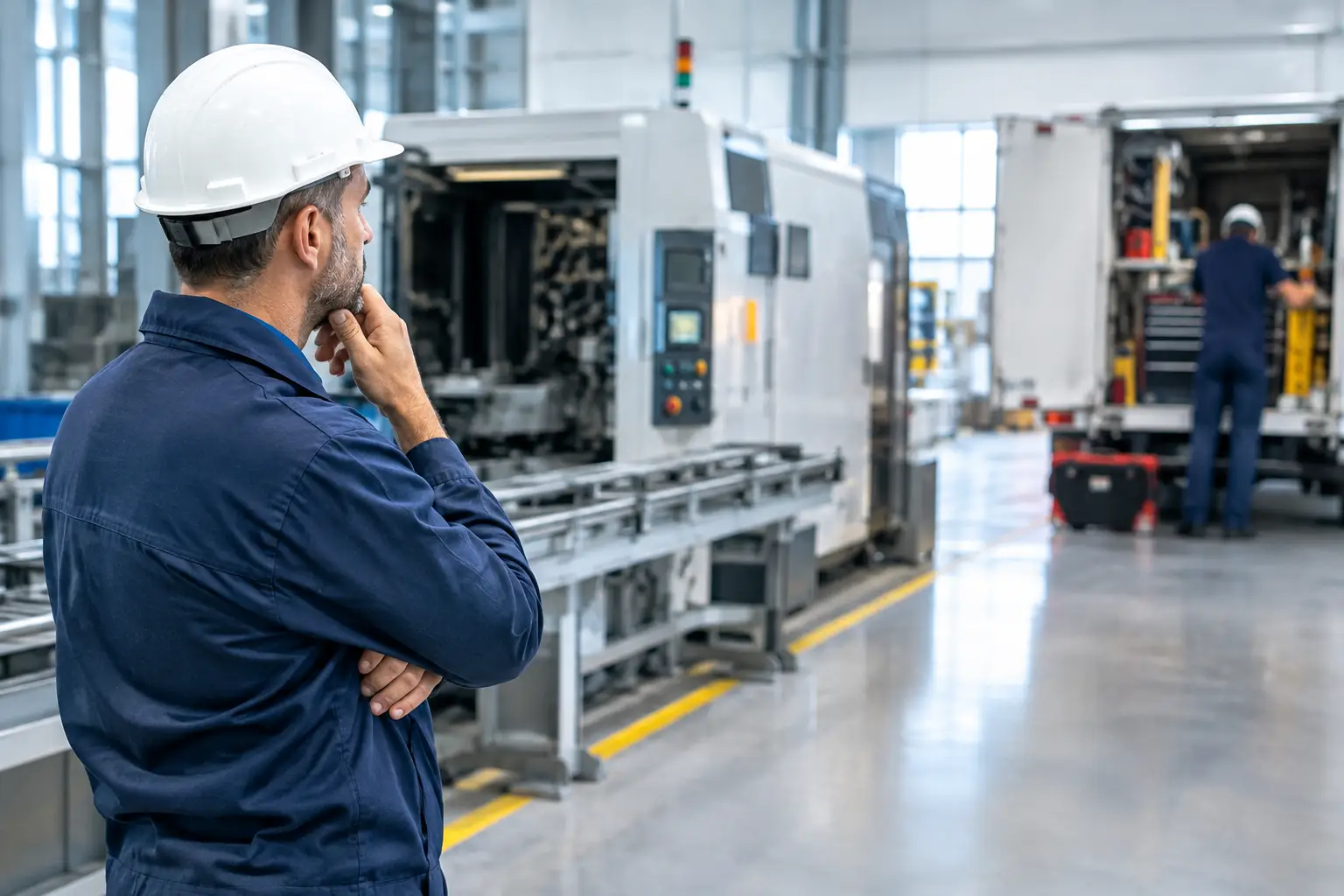
A failed bearing, damaged control panel or missing machine part can stop an entire production line within minutes. While maintenance teams identify the fault and engineers prepare the repair, the next question is usually the most urgent: how quickly can the required part reach site? Factory breakdown delivery is built for that moment – when a standard next-day service is not enough and every hour of downtime has a cost.
For manufacturers, production managers and maintenance contractors, the priority is not simply getting an item from A to B. It is getting the right item collected quickly, handled safely and delivered directly to the person who can put the operation back into service.
Why factory breakdown delivery needs direct control
A breakdown consignment is rarely convenient. It may be a heavy gearbox collected from a supplier, a fragile electrical component travelling to a remote site, or a long, awkward part that will not fit safely into a parcel network. The delivery may also need to arrive at a factory gate at a specific time, after which a planned maintenance window closes and the cost of disruption increases again.
Multi-drop networks are designed for volume. Parcels move through depots, are loaded with other consignments and follow a route that can change as the day develops. That model works well for routine stock replenishment, but it introduces handling points and uncertainty that are difficult to accept when a line is down.
A dedicated same-day vehicle removes those avoidable stages. The consignment is collected, secured in a vehicle selected for its size and handling needs, then taken straight to the delivery address. There are no depot transfers, no additional drops and no question over which driver is responsible for the delivery. It is one vehicle to one important delivery.
What happens when a factory breaks down
Speed matters, but accurate information matters first. Sending an unsuitable vehicle wastes time at the beginning of a job and can create further delay at collection or delivery. A dependable transport provider will establish what is being moved, where it is, where it needs to go and when it must arrive.
That includes the dimensions, weight, number of pieces and any loading restrictions. A small but high-value electronic part may need secure, careful transport in a car-derived van. A palletised motor may require a larger van with suitable loading equipment. Longer machinery components, production tooling or crated parts may call for a curtain-sided vehicle, a sliding-roof lorry or a vehicle with a mounted forklift.
Collection details are equally practical. Can the supplier load the part? Is there a loading bay? Does the collection point close at a fixed time? At the factory, is there a named engineer, security procedure or delivery point that the driver must use? Handling these details before the vehicle is dispatched helps prevent a fast response becoming a frustrating wait at the gate.
The real cost is often greater than the replacement part
Downtime is not limited to the value of lost output. A delayed repair can leave employees waiting, affect downstream production, interrupt customer orders and force a business to rearrange labour, materials and transport. Where a factory supplies construction, retail, food production or another time-sensitive sector, the disruption can travel beyond the original site.
This is why the cheapest transport option is not always the most economical. A lower price can be false economy if the part spends hours awaiting a sortation scan or arrives after an engineer has left. Dedicated transport costs more than a standard parcel service because it reserves a vehicle and driver for one consignment. In a genuine breakdown, that direct control can be the difference between a short interruption and a missed shift.
Choosing the right vehicle for urgent factory parts
Vehicle matching protects both the delivery deadline and the consignment. A part should not be forced into a vehicle that is too small, poorly equipped or unable to access the site safely. It also should not travel in a much larger vehicle than necessary if a smaller option can complete the job more efficiently.
For compact parts, documents and urgently needed tools, a small van can offer rapid collection and easier access to congested industrial estates or central London locations. Medium and large vans suit crates, multiple cartons and palletised components where secure loading space is needed. Larger consignments may require a 7.5-tonne, 18-tonne or 26-tonne lorry, particularly where machinery, shop-floor equipment or oversized engineering items are involved.
Specialist requirements should be discussed early. A sliding roof can assist with crane loading. A mounted forklift can be essential when there is no loading equipment available at one end of the journey. For valuable or fragile parts, secure loading, careful restraint and a trained driver are not optional extras. They are the basic safeguards that protect the repair schedule.
Tracking, communication and proof of delivery
When production has stopped, vague updates are not helpful. The maintenance manager needs a realistic collection time, clear progress information and confirmation that the driver is heading to the correct site. They may also need to keep an engineer, supplier, customer or senior operations team informed.
Real-time tracking provides visibility during the journey, but it works best alongside direct human communication. Road closures, collection delays and access issues do happen. What matters is that they are identified early, communicated honestly and managed by someone who takes responsibility for the job.
At delivery, proof of completion should be clear. That may mean a signature, the recipient’s name, a time-stamped confirmation or delivery to a specific department. For some consignments, a driver may need to wait while the item is checked or make sure it reaches an agreed secure point rather than leaving it at reception. These details protect the customer and remove uncertainty at a critical moment.
Planning for the next breakdown
No maintenance team wants to plan around a failure, but a simple transport contingency can reduce pressure when one occurs. Businesses with recurring urgent movements benefit from knowing who to call, what information will be required and which vehicle types are available before the first emergency job arises.
Keep accurate weights and dimensions for regularly required spares where possible. Record collection contacts for key suppliers and confirm delivery instructions for each factory or distribution site. If access conditions vary by shift, include gate opening times, security requirements and out-of-hours contact numbers. These practical details allow a courier to act quickly rather than chase information while the line remains idle.
It is also worth separating truly critical parts from items that can travel on a scheduled service. Dedicated same-day transport should be reserved for consignments where urgency, value, size or handling requirements justify it. Scheduled deliveries can then support planned maintenance, stock transfers and routine supply without paying for an emergency response every time.
For organisations with regular UK-wide requirements, a courier account can bring useful consistency. Agreed procedures, known contacts and familiarity with site requirements make it easier to arrange transport at short notice. This does not remove the need for a careful booking, but it gives the operation a reliable route to action when time is tight.
A practical response when the line is down
The best factory breakdown delivery is calm, direct and properly controlled. It starts with an honest assessment of the consignment and deadline, uses the right vehicle, keeps handling to a minimum and provides clear confirmation at every stage. That approach is particularly valuable for manufacturers across Essex, Suffolk, London and the wider UK, where a critical component may need to cross the country rather than travel around the corner.
Redhead Couriers provides dedicated transport for urgent parts, machinery components and difficult consignments that cannot be left to a multi-drop network. With trained drivers, tracked vehicles and a fleet ranging from small vans to 26-tonne lorries, the focus stays on getting the item safely to the people waiting for it.
When a production line stops, provide the collection address, delivery point, dimensions, weight and required arrival time as early as possible. The clearer the brief, the faster the right vehicle can be on its way – and the sooner your engineers can get the factory moving again.