
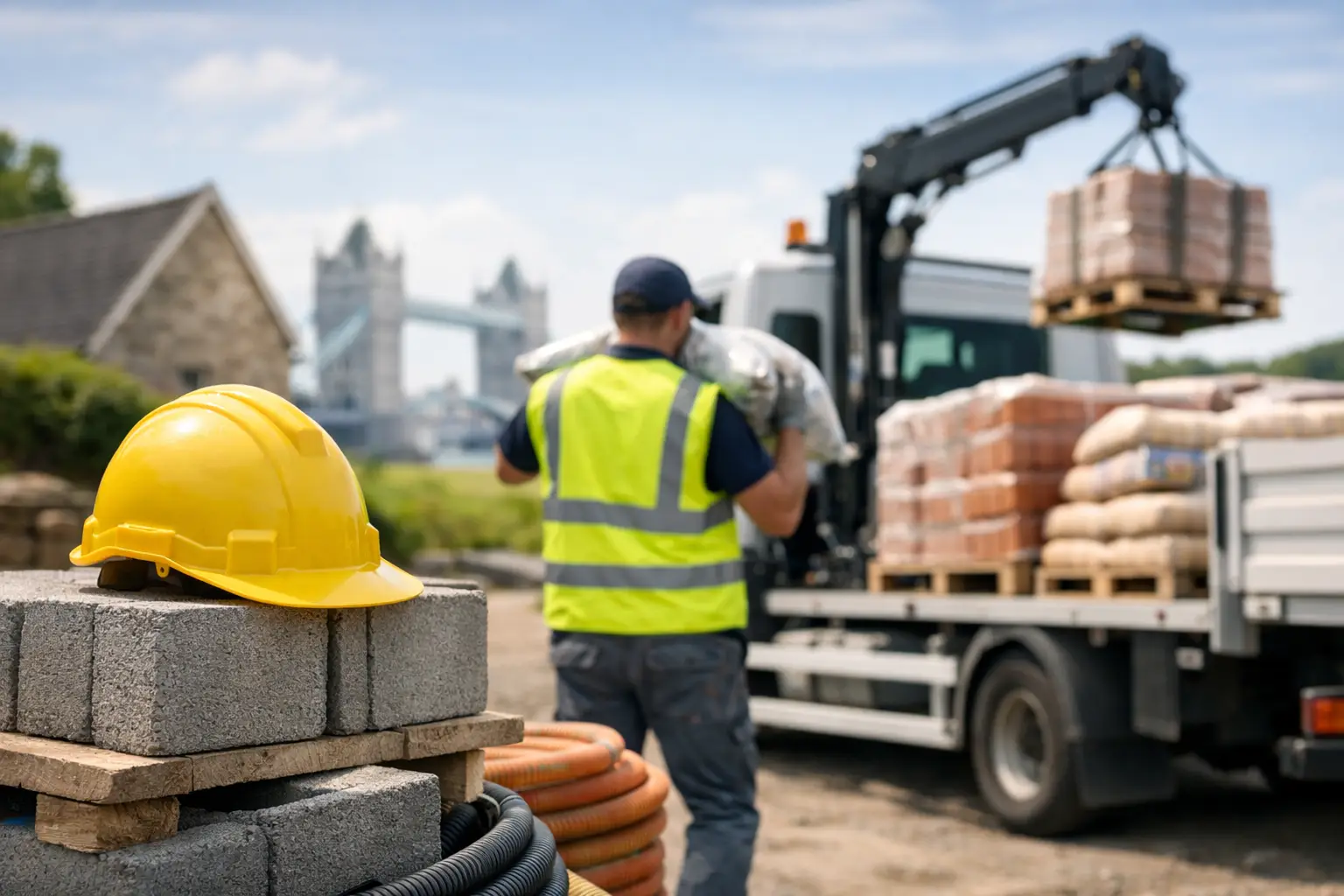
A missing length of steel, a damaged glazing panel or a late pallet of fixings can stop an entire site. When that happens, a construction materials courier is not simply moving goods from A to B. They are protecting programme dates, labour costs and the next trade waiting to start work.
Standard networks are built for repeatable parcels and flexible delivery windows. Construction deliveries are rarely that straightforward. Materials may be long, heavy, fragile, high-value or needed at a specific gate before a booked unloading slot closes. They need direct control from collection to delivery.
When construction materials need dedicated transport
Construction sites run to tight sequences. A dryliner cannot finish without boards. A steel installer cannot proceed without the correct fabricated section. A shopfitting team may have one overnight window to install signage, displays or specialist joinery before a store reopens.
In these situations, sending materials through a multi-drop network creates unnecessary risk. Goods can be transferred between depots, loaded and unloaded several times, delayed by unrelated deliveries or separated from accompanying components. Even where a network accepts the consignment, it may not have the vehicle, loading equipment or delivery control the job requires.
A dedicated courier service assigns one suitable vehicle to one important delivery. The driver collects your consignment and takes it directly to the required UK destination, without depot transfers or other drops along the way. That approach is particularly valuable when materials are urgent, awkward to handle or required at a precise time.
It also gives the site team a clearer picture of what is happening. Instead of hoping a consignment appears within a broad delivery window, you can track its journey, communicate any site instructions and receive proof of completion when it has been delivered.
What a construction materials courier can move
The right transport solution depends on the material, its dimensions, its weight and the conditions at both ends of the journey. An urgent box of specialist fixings may suit a small van. A delivery of timber lengths, fabricated steelwork or bulky equipment may need a larger vehicle with safe loading arrangements.
Dedicated construction transport is commonly used for materials such as timber and sheet goods, steel sections and metalwork, doors and ironmongery, glazing and fragile panels, pipework, cable and electrical equipment, flooring, tiles and sanitaryware. It is also useful for tools, plant components, exhibition structures, shopfitting materials and replacement parts that are holding up a job.
The material itself is only part of the assessment. A 3-metre length may be light but difficult to secure. A pallet may be manageable at collection but impossible to unload at site without a forklift. Fragile finishes may need protection from movement and weather. This is why booking should begin with practical questions, not a generic parcel size form.
Vehicle matching prevents avoidable delays
A capable construction materials courier will match the vehicle to the actual consignment and site requirements. That may mean a small van for urgent components, a Luton van for protected bulky items, a curtain-sided vehicle for easier side access, or a 26-tonne lorry for heavier and larger loads.
For especially awkward consignments, specialist options matter. A sliding-roof vehicle can support crane loading where access from the side is limited. A mounted forklift can be the right answer where the receiving site has no suitable unloading equipment. These details should be agreed before collection, rather than discovered when the driver arrives at a closed gate or an unprepared site.
Vehicle choice is also a safety decision. Overloading, poor weight distribution and inadequate restraint create risks for the driver, the consignment and other road users. Proper planning gives materials the support they need in transit and helps the delivery arrive ready for use, not damaged or delayed.
Direct delivery gives site teams more control
Construction projects do not always need a same-day vehicle. Planned deliveries can be arranged for the following day, a specific date or a timed slot. But when the requirement is urgent, direct delivery provides the speed and certainty that a shared network cannot promise.
A dedicated vehicle means the route is designed around your delivery, not around dozens of unrelated consignments. The driver can collect immediately, travel straight to site and follow the delivery instructions provided. If the site has restricted access, a named contact, a booking reference or a particular gate for deliveries, that information can travel with the job from the outset.
This level of control is valuable on London and city-centre sites, where delivery windows are often tight and access can be difficult. It is equally useful for rural projects, manufacturing facilities and regional sites where a failed delivery may mean waiting another day. A direct service does not remove every variable – traffic, weather and site conditions still matter – but it removes the avoidable complexity of depot handling and multi-drop schedules.
Loading and unloading need as much attention as the journey
The most expensive delivery problems often happen before the vehicle leaves or when it reaches site. Materials can be loaded without adequate protection, packed in the wrong order, or sent to a location that cannot receive them safely.
Before booking, confirm the dimensions, weight and number of pieces, as well as whether the goods are loose, palletised, crated or still on a supplier’s rack. Share photographs where useful, particularly for unusually shaped items. Explain whether loading equipment is available at collection and unloading equipment is available at delivery.
Site access needs the same care. Consider height restrictions, narrow roads, weight limits, pedestrian areas, security procedures and whether the driver can wait if the site team is temporarily unavailable. If materials must be unloaded by forklift, crane or site labour, arrange that resource for the agreed arrival time.
Clear instructions protect everyone involved. They also help the driver complete the delivery efficiently and obtain an accurate proof of delivery from the correct recipient.
Choosing a courier for urgent building materials
Price matters, but the cheapest quote can be costly if the vehicle is unsuitable, the load is mishandled or the delivery misses a critical slot. For urgent building materials, assess a provider on its ability to take ownership of the full job.
Look for direct, dedicated delivery rather than a service that may pass the consignment through a network. Ask how the material will be secured, whether the vehicle can accommodate the dimensions, and what loading or unloading support is available. Confirm that the journey can be tracked and that you will receive clear confirmation once delivery is complete.
It is also sensible to ask who will manage the booking if plans change. Construction schedules move quickly. A supplier may delay release, a site may change its delivery gate or a fitting team may need the materials redirected. A transport provider with experienced people at the end of the phone can deal with those changes calmly and give practical advice before they become a problem.
For regular requirements, a courier account can make the process quicker. Your usual site rules, material types and delivery preferences can be understood over time, making it easier to arrange urgent work without having to explain the same operational details on every booking.
A practical way to book with confidence
When requesting a quote, give the transport consultant the collection postcode, delivery postcode, required collection time and required delivery time. Include a full description of the materials, their dimensions and weight, plus any special handling needs. State whether the goods need to remain dry, upright, protected from impact or secured in a particular way.
Then explain the practical conditions at each end: forklift availability, crane loading, access restrictions, booking-in requirements and the name and number of the site contact. If the delivery is programme-critical, say so. That enables the courier to recommend the right vehicle and service level rather than making assumptions.
Redhead Couriers provides this kind of one-vehicle, one-delivery support for urgent and scheduled construction transport across Essex, London and the wider UK. With trained drivers, tracked journeys and vehicles selected around the load, the focus stays where it should be: getting the right materials to the right place, on time and 100% safe.
The best time to plan an urgent materials delivery is before the site is standing still. Keep the key measurements, access notes and supplier contacts to hand, and a dedicated courier can turn a potential delay into a controlled delivery.