
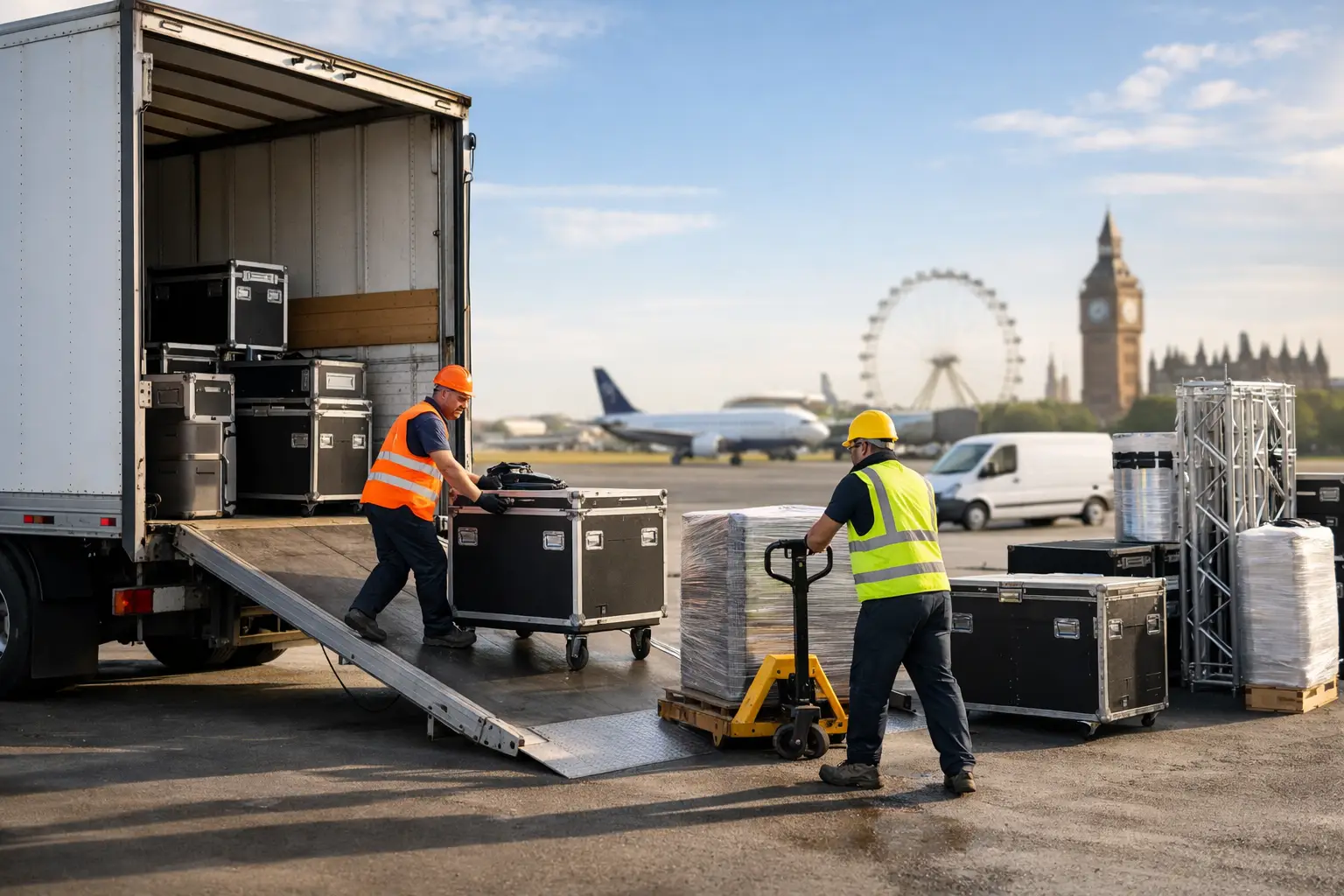
A stand that arrives late, damaged or without its essential components can turn months of exhibition planning into a very public problem. The best transport for exhibition stands is not simply the cheapest vehicle available. It is a dedicated, properly planned service that collects your display materials, protects them in transit and delivers them to the venue when your build team needs them.
Exhibition freight often includes more than a few pop-up banners. Modular frames, graphic panels, counters, lighting, screens, samples, literature, tools and branded furniture all need to arrive together and in usable condition. When one item is missing, the whole stand can be held up. That is why the transport decision deserves the same care as the stand design itself.
Why exhibition stands need dedicated transport
Standard parcel and pallet networks are built around consolidation. Goods pass through hubs, depots and multiple vehicles before reaching their destination. That model can work for routine cartons with flexible delivery dates, but it introduces avoidable handling and uncertainty for exhibition equipment.
A dedicated vehicle removes those unnecessary stages. Your consignment is collected, secured in one vehicle and taken directly to the venue or contractor. There are no multi-drop routes, no depot transfers and no risk of another consignment being loaded on top of fragile graphics or display cases. You know who is carrying the stand, where it is and when it is expected to arrive.
This approach is particularly valuable when access to an exhibition hall is controlled by a strict delivery slot. Venues may allocate a short unloading window, restrict vehicle sizes or require arrivals before the hall opens to exhibitors. A driver who arrives early may still be unable to unload, while a driver who arrives late can miss the slot entirely. Direct transport gives you far more control over the journey and the arrival time.
Match the vehicle to the stand, not the other way round
The right vehicle depends on the full consignment, not just the largest crate. Before booking, consider the packed dimensions, total weight, loading method, fragility and whether any items must travel upright. Also account for the return journey. A stand may leave the office in neat flight cases but return with loose graphics, extra literature and packaging.
A small van can suit lightweight banner stands, sample cases and compact promotional materials. A long-wheelbase or Luton van is often more appropriate for modular displays, counters and multiple flight cases. Larger shell-scheme components, exhibition furniture or heavy equipment may require a 7.5-tonne vehicle or a 26-tonne lorry.
Vehicle access matters as much as capacity. A tail lift can make loading wheeled cases safer where a loading bay is unavailable. A mounted forklift can be the sensible option for large crates or palletised equipment at sites without handling equipment. For tall structures or awkward loads, a sliding-roof vehicle may allow crane loading without forcing items into an unsuitable vehicle.
Trying to make a stand fit into a smaller van can create problems before the journey begins. Panels may be stacked incorrectly, cases may not be properly restrained, and the driver may have limited room to unload safely at the venue. A transport consultant should ask the practical questions first, then recommend the vehicle that protects the consignment and keeps the job straightforward.
Loading is part of the service
Exhibition materials can look durable while being surprisingly vulnerable. Printed panels can scratch, acrylic surfaces can crack and aluminium frames can bend if they are unsecured. Even flight cases need proper restraint; they can shift under braking and damage other equipment inside the vehicle.
Careful loading means using suitable straps, blankets, edge protection and load placement. Heavy items should be positioned to maintain vehicle stability, while fragile graphics and screens should be protected from pressure and movement. If several parts belong to one stand, keeping them together also reduces the chance of a vital component being left behind at collection or unloaded at the wrong point.
Plan around the venue timetable
Exhibition venues operate to schedules that are rarely forgiving. Build-up days, contractor access periods, security checks and congestion around loading bays all affect delivery. The best time to arrange transport is when your stand plan and venue requirements are known, not the afternoon before the event.
Start with the required delivery date and allocated slot. Confirm the venue name, hall, entrance, stand number and on-site contact. Ask whether the driver needs a delivery pass, booking reference or vehicle registration submitted in advance. It is also worth checking height restrictions, waiting rules and whether the venue supplies unloading staff or expects the exhibitor to arrange them.
For high-value or time-critical stands, a timed dedicated delivery is usually the safest option. The vehicle can be scheduled around the slot rather than fitted into a general route. If plans change, direct contact with the transport provider gives you a clear route to adjust the collection or arrival time.
The return collection should be planned with equal care. At the end of an exhibition, loading areas can become congested quickly as hundreds of exhibitors leave at once. Confirm when the stand will be dismantled, who will hand over the equipment and whether it will be repacked into labelled cases. A pre-booked collection avoids equipment being left unattended while you search for last-minute transport.
What to give your transport provider
Accurate information allows the provider to organise the correct vehicle, equipment and route from the outset. Photographs are useful for unusually shaped items, but dimensions and weights are essential. Do not estimate a heavy crate or assume all cases are identical.
Provide the collection address, venue details, delivery slot, named contacts and a complete item list. Flag anything fragile, high-value, temperature-sensitive or difficult to carry. If the consignment includes screens, glass, prototypes or confidential product samples, say so clearly. The handling plan may need to change.
It also helps to identify what must arrive first. Some stands cannot be built until the flooring, frame or central counter is in place. If the vehicle carries several separate elements, a sensible loading order can make unloading quicker and reduce the need to move items around in a busy loading bay.
Best transport for exhibition stands: dedicated or shared?
Shared transport can appear attractive when budget is the only consideration. If the stand is small, non-fragile and the delivery date has plenty of flexibility, it may be acceptable. However, the lower price can come with more handling, less control over collection and delivery times, and a greater chance that a delay elsewhere affects your consignment.
Dedicated transport is generally the better choice for a fixed exhibition deadline, a high-value stand or an awkward load. One vehicle carries your equipment directly from collection to delivery. You receive a single accountable point of contact, real-time tracking where required and proof of delivery when the handover is complete.
The value is not only in getting the stand to the venue. It is in reducing the operational risk placed on your marketing team, contractors and event staff. When the transport is controlled, they can focus on building the stand and meeting visitors rather than chasing a missing case through a network.
Build contingency into the booking
No transport plan can remove every variable. Roadworks, venue queues, weather and late changes to access arrangements happen. The sensible response is to build time into the schedule and use a provider that can react quickly when circumstances shift.
Where possible, arrange collection early enough to avoid relying on a single narrow window. Keep a copy of the venue paperwork with the stand paperwork, and make sure the driver has an accessible contact number for someone authorised to make decisions. Tracking and proactive communication are particularly useful when the venue team needs an accurate arrival update.
For recurring events, it is worth keeping a transport record after each show. Note the vehicle used, access difficulties, loading times and any changes needed next time. This turns each booking into a more efficient plan for the next exhibition season.
Redhead Couriers provides dedicated same-day and scheduled transport for exhibition equipment across the UK, matching the vehicle and handling approach to the stand rather than forcing the stand into a standard network service. From compact display cases to oversized structures, the priority is simple: one vehicle, one important delivery.
The best exhibition transport is the service that lets your stand team walk into the hall knowing the equipment is there, protected and ready for the job ahead.