
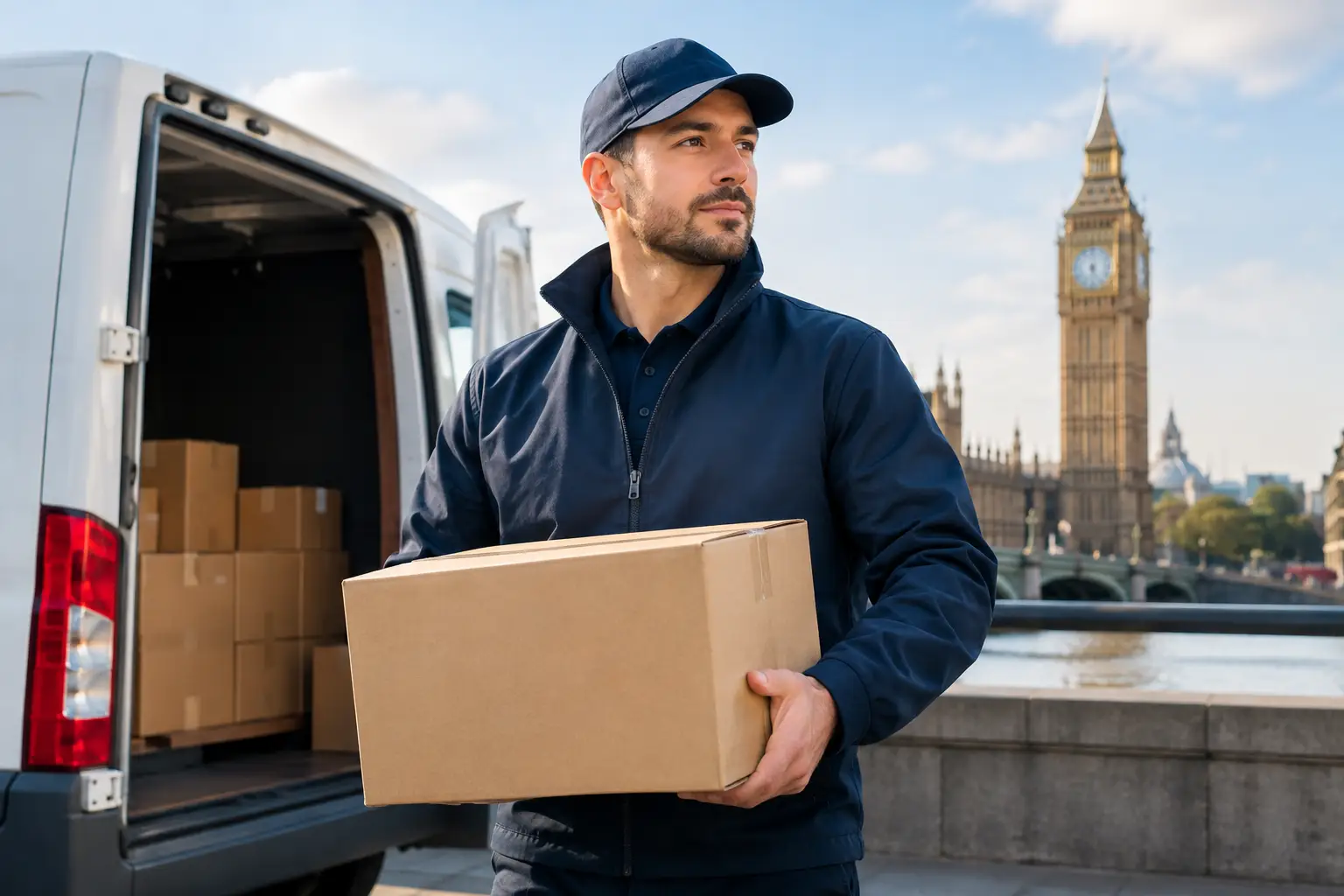
A production line waiting for one missing component does not need a standard parcel service. A solicitor with time-sensitive documents, a shop fitter with a damaged display panel or a printer with a last-minute client deadline needs certainty. This same-day logistics guide explains how dedicated transport works, when it is the right choice and what to expect from collection through to proof of delivery.
What same-day logistics means in practice
Same-day logistics is the organised movement of a consignment from collection to delivery on the same day, usually within a defined time window. For critical work, the distinction is not simply speed. It is control.
A dedicated same-day courier collects your item in a vehicle assigned to that delivery alone. It travels directly to the delivery address rather than entering a multi-drop route, passing through a depot or being handled repeatedly by different teams. The driver, vehicle and journey are planned around your consignment.
That approach is particularly valuable when a delivery is urgent, fragile, high-value, oversized or difficult to handle. It gives the sender one accountable point of responsibility and gives the recipient a clearer idea of when the consignment will arrive.
Standard parcel and pallet networks are useful for routine freight with flexible timings. They are built to consolidate large volumes and keep costs low across many consignments. The trade-off is that a parcel may be sorted, transferred and loaded several times before final delivery. For a replacement machine part required before a night shift, that model can create too much uncertainty.
When dedicated same-day transport is the sensible option
The right transport service depends on the consequence of delay. If an item can arrive tomorrow without affecting a job, a scheduled service may be more economical. If a missed deadline stops site work, delays a launch or leaves a customer without essential equipment, same-day transport can protect far more than the cost of delivery.
Construction and fit-out teams often use dedicated vehicles for materials, tools, fixtures and replacement parts needed to keep trades working. Advertising, publishing and printing businesses may need proofs, exhibition materials, display graphics or finished work delivered to a fixed event or client deadline. Manufacturers commonly require urgent components, samples or specialist equipment moved between sites.
Legal firms may need sensitive documents handled with care and delivered directly to a named recipient. Private customers can face similar requirements when moving valuable artwork, antiques, musical equipment or items that are too awkward for a conventional courier network.
In each case, the question is not only, “Can it arrive today?” It is also, “Will it be loaded safely, carried in the right vehicle, tracked during transit and handed to the correct person?” A properly planned same-day job answers all four.
Urgency is only one part of the decision
A consignment does not have to be needed within hours to justify dedicated transport. An item may be scheduled for a precise time because a site has restricted access, a loading bay is booked or a recipient can only accept delivery during a short window. Direct transport is often the safer choice for timed deliveries because the vehicle is not trying to meet dozens of unrelated stops.
Likewise, a valuable or delicate item may be better suited to a dedicated journey even when next-day delivery is possible. Fewer handling points mean fewer opportunities for damage, loss or misdirection.
How to plan a same day logistics booking
Good results start before the vehicle leaves. The transport provider needs an accurate picture of the item, the collection point and the delivery conditions. A vague description can lead to the wrong vehicle arriving or a delay at collection, neither of which helps when the clock is already running.
Begin with the collection and delivery postcodes, along with the earliest collection time and latest acceptable delivery time. Confirm whether either location has booking-in requirements, restricted access, security procedures, height limits or loading restrictions. A central London delivery, for example, may require different route planning from a straightforward industrial estate delivery in Essex or Suffolk.
Give the item’s dimensions, weight and quantity. Photographs are useful for unusually shaped, fragile or high-value consignments, particularly where careful positioning, securing or specialist loading equipment may be needed. Explain whether the item can be lifted by one person, needs a tail lift or forklift support, or requires a sliding-roof vehicle for overhead loading.
It also helps to identify the named collection and delivery contacts. They should know the job is taking place, be reachable by telephone and understand any paperwork or identification requirements. Small details at this stage prevent wasted time later.
Match the vehicle to the consignment
Vehicle choice should be based on safe handling, not just whether the item physically fits. A small van may be appropriate for documents, samples or compact urgent parts. Larger vans and lorries can carry long, heavy or bulky materials, display units, machinery and site equipment.
For awkward loads, specialist equipment can make the difference between a controlled delivery and an avoidable problem. A mounted forklift can support loading or unloading where no suitable equipment is available at site. A sliding roof may be required for crane loading. The vehicle also needs adequate securing points and enough space to prevent movement in transit.
Choosing a larger vehicle than strictly necessary can sometimes be sensible, especially for fragile goods that should travel separately from other items or need room for protective packaging. The most economical option is not always the lowest quoted price. It is the option that gets the consignment there safely, first time.
What happens from collection to delivery
Once a dedicated vehicle is allocated, the driver attends the collection point and checks the consignment against the booking details. Where appropriate, the load is protected and secured before departure. The journey then runs directly to the destination, with no hub transfers and no unrelated deliveries added to the route.
Real-time tracking gives operational teams visibility while the consignment is moving. That is particularly useful when colleagues, contractors or clients need an accurate arrival update. It also means a delivery can be monitored rather than chased after a deadline has already passed.
At the destination, the driver follows agreed site instructions and obtains confirmation of delivery. Depending on the job, this may include a signature, named recipient details or photographic proof. The point is simple: you should be able to show that the item arrived, where it was expected and when it was handed over.
This direct chain of custody is one of the major advantages of one vehicle, one delivery. Rather than trying to locate an item within a national network, the transport provider remains responsible for the journey from collection to completion.
Risks that should not be left to chance
The most common failure in urgent logistics is treating it as an ordinary parcel job. That can mean sending an oversized item through a network that cannot accommodate it, assuming a recipient will be available, or booking a vehicle without explaining the access conditions.
There is also a temptation to focus only on collection speed. Immediate collection matters, but safe loading and a realistic route are equally important. A driver who arrives quickly in an unsuitable vehicle has not solved the problem. Nor has a provider that promises a delivery time without checking road restrictions, site procedures or the actual condition of the load.
Ask clear questions before booking. Will the consignment travel directly? Is the vehicle dedicated to this job? How will it be secured? Can you track it? What proof of delivery will be provided? If the item needs specialist handling, ask how that requirement will be managed rather than assuming it is included.
A capable provider will answer plainly, advise on vehicle suitability and flag any risks before collection. That practical conversation is often what turns an urgent request into a controlled delivery.
Choosing a courier that takes ownership
For businesses with recurring urgent transport needs, consistency matters as much as speed. A courier account can make repeat bookings quicker, but it should also mean that the provider understands your typical consignments, delivery sites and pressure points.
Look for trained drivers, maintained vehicles and clear communication from the first call. Consider whether the operator can provide the full range of vehicles your work demands, from small vans to 26-tonne lorries, rather than forcing every job into the same solution. Environmental and operational standards also matter in busy urban areas, where ULEZ compliance and recognised fleet practices can affect access and planning.
Redhead Couriers provides dedicated, UK-wide same-day transport for deliveries that need close control, careful handling and a direct route. The service is designed around the item and deadline, not around a depot schedule.
When a delivery carries a real commercial consequence, give the transport details the same attention as the item itself. A clear brief, the right vehicle and one accountable journey will keep the job moving – tracked, safe and on time.