
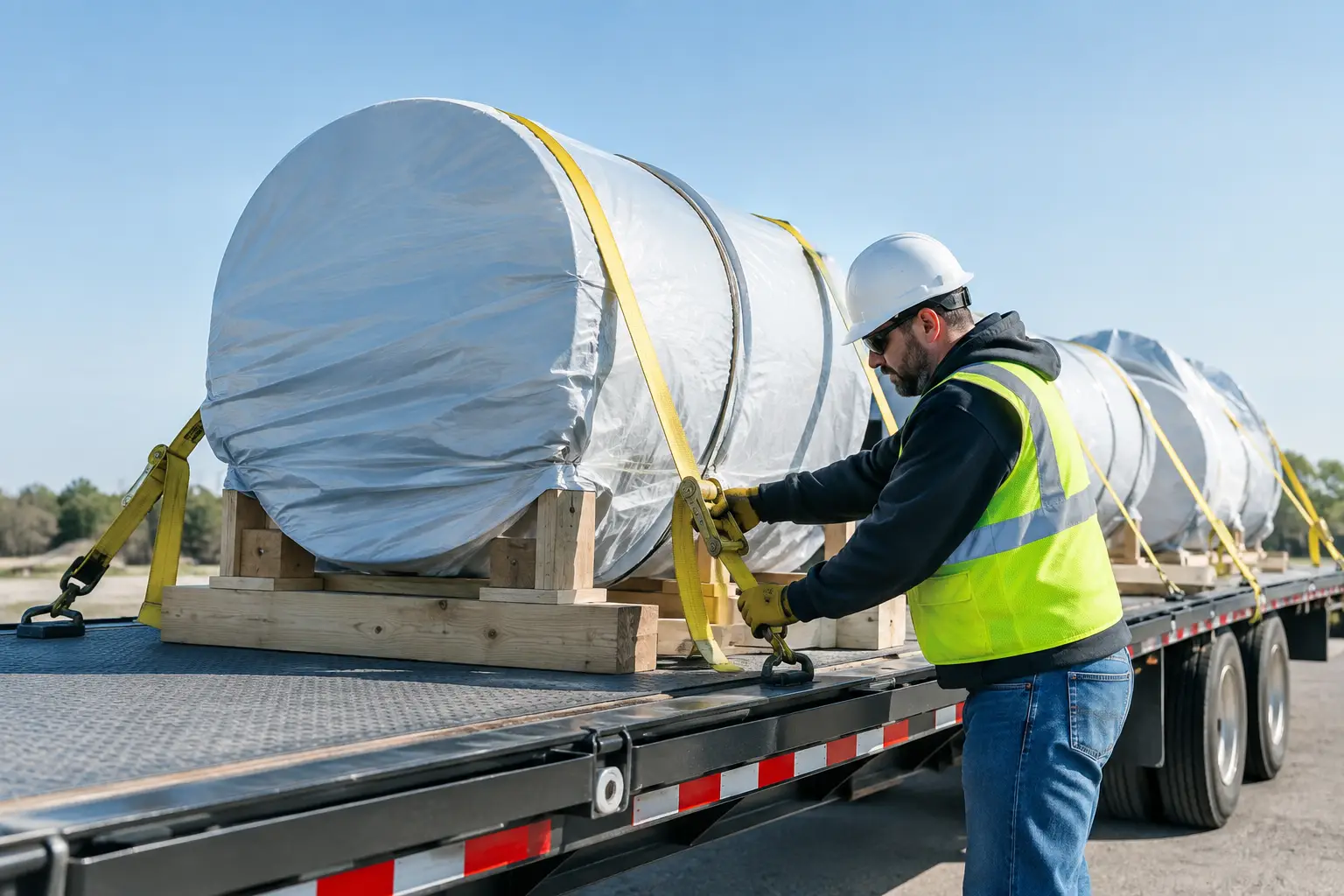
A load does not need to be particularly heavy to be difficult to move safely. A long shopfitting panel, a crated machine with an uneven base, a fragile display unit or an oversized printed installation can all become a problem when it shifts by only a few centimetres. Knowing how to secure awkward loads starts before collection: with an honest assessment of the item, the right vehicle and a transport plan that keeps handling to a minimum.
For urgent or high-value consignments, the safest approach is usually direct transport. One vehicle collects, carries and delivers the item, rather than passing it through depots, cages and multiple vehicles. That gives the driver and transport team control over the load from start to proof of delivery.
What makes a load awkward?
An awkward load is not simply one that is large. It is any item that cannot be safely treated as a standard box or pallet. It may be too long for a conventional van, too wide to sit squarely against a bulkhead, top-heavy, fragile, difficult to grip, poorly balanced or shaped in a way that leaves gaps around it.
Common examples include architectural samples, exhibition stands, glazing, machinery parts, retail fixtures, fabricated metalwork, artwork, event equipment and long-format print materials. Some items have a high centre of gravity. Others are light but easily crushed. A single transport method will not suit them all.
The main risks are movement under braking or cornering, damage caused by restraint equipment, and unsafe loading or unloading. There is also a commercial risk: if a vital component arrives damaged or late, a site team, installation crew or production line may be left waiting.
How to secure awkward loads before the vehicle arrives
Good load security begins with accurate information. Dimensions, weight and photographs give a transport provider the detail needed to choose a suitable vehicle and plan the collection. Do not rely on approximate measurements where clearances are tight. Include packaging dimensions, protruding parts, lifting points and whether the item can be stacked, tilted or laid flat.
You should also identify what the load cannot tolerate. A fragile unit may need to remain upright. A long panel may need full-length support to prevent flexing. A machine may have sensitive controls or exposed fittings that must not be used as tie-down points. If there are manufacturer handling instructions, make them available before collection.
Packaging matters, but it is not a substitute for restraint. Corner protection, foam, timber framing, shrink wrap and transit blankets can protect surfaces and edges. The load must still be prevented from moving. Equally, straps must not be tightened directly over a delicate casing, glass edge or unsupported section where the restraint itself could cause damage.
Match the vehicle to the load, not the other way round
Trying to make an unsuitable vehicle work is where many avoidable problems begin. A small van may be ideal for documents or compact samples, but it is rarely the sensible choice for a tall, wide or unbalanced item. The vehicle needs enough internal length, height and payload, as well as proper anchorage points for load restraint.
For heavier, longer or more complex consignments, a larger van, curtain-sided vehicle or lorry may be more appropriate. A sliding-roof vehicle can make overhead loading easier where a forklift is available. A mounted forklift can be the practical answer where the collection or delivery point has no loading equipment. It depends on the site, the item and whether loading needs to take place from the rear, side or above.
Vehicle choice is also about access. Check loading-bay restrictions, low bridges, timed site slots, narrow roads and whether the destination can accept a larger vehicle. A well-secured load is of little use if the vehicle cannot reach the delivery point safely or on time.
Use the right restraint method
There is no single strap arrangement that suits every consignment. The right method depends on the load’s weight, shape, centre of gravity, packaging and the vehicle’s anchorage points. A trained driver will assess these factors at collection rather than applying a standard fix to every job.
For many loads, ratchet straps used with protective sleeves and edge guards provide controlled restraint. They should be attached to rated anchor points, positioned to resist forward, rearward and sideways movement, and tightened enough to hold the item securely without crushing it. A strap over the top of an object may stop it lifting, but it may not stop it sliding. Blocking, bracing or anti-slip material may be needed as well.
Long or flexible items often need support at several points. Where safe and suitable, they may be secured against a side or supported on purpose-built stillages. Top-heavy loads should be kept low, centred where possible and prevented from tipping. Heavy items must be positioned with vehicle balance in mind, not simply placed in the nearest available space.
Avoid improvised restraints. Rope, loose wrapping and unsecured padding can create false confidence. Similarly, never assume a palletised load is safe merely because it is wrapped. If it can move across the vehicle floor, it can still be damaged in transit.
Load safely and check it again
The loading process should be calm and deliberate. Rushing an urgent collection is understandable, but hurried lifting and poor communication are common causes of damage. Confirm who is directing the operation, keep people clear of pinch points and use appropriate handling equipment for the weight and shape involved.
Once loaded, the driver should inspect the restraint arrangement before departure. The load should not rock, slide, lean or make contact with sharp edges. Doors, curtains and access equipment must close correctly without pressing against the consignment. The vehicle’s payload limit must also be observed.
A second check is sensible after the first part of the journey, especially for a load that may settle into its packaging or restraints. On longer runs, drivers should check at suitable safe stopping points. Any sign of movement should be addressed before the journey continues.
Why direct delivery reduces risk
Multi-drop parcel and pallet networks are built for standardised consignments moving at volume. That model can be efficient for routine freight, but it creates extra handling stages: collection vehicles, sorting centres, transfer points and final-mile routes. Every transfer introduces another opportunity for an awkward item to be mishandled, misplaced or delayed.
Dedicated transport keeps the chain of custody simple. The same vehicle takes the item from collection to destination, with no depot transfer and no unrelated deliveries competing for space. This is particularly valuable for time-critical construction components, fragile marketing materials, legal documents, one-off fabricated items and equipment needed for a fixed installation slot.
Tracking and clear communication add another layer of control. The sender should know when the consignment has been collected, where it is during transit and when it has been delivered. At the destination, the driver should confirm that the correct person has received the item and obtain proof of completion.
When specialist support is the safer choice
Some loads need more than a capable van and a few straps. Seek specialist transport advice when an item is exceptionally heavy, unusually high or wide, requires lifting equipment, has a high declared value, must remain upright, or has a fixed delivery window with no room for delay. The same applies when collection and delivery sites have uncertain access arrangements.
A dedicated transport provider should ask practical questions, not just quote from a postcode and weight. At Redhead Couriers, that means considering the consignment, access conditions, vehicle requirements and delivery deadline before allocating the job. The aim is not to force a difficult item into a standard service. It is to give it the controlled journey it needs.
The best time to solve a load-security problem is before the vehicle is on site. Share clear details, allow for the right vehicle and restraint equipment, and keep the consignment in one accountable pair of hands from collection to delivery. That is how an awkward load arrives safe, intact and ready for the work waiting at the other end.