
A production line stops because one essential component has not arrived. A shop fitting team is waiting on site for display units. A legal team needs signed documents delivered before a fixed deadline. In situations like these, the question of haulage versus courier is not just about transport cost. It is about choosing the level of control, speed and care the consignment requires.
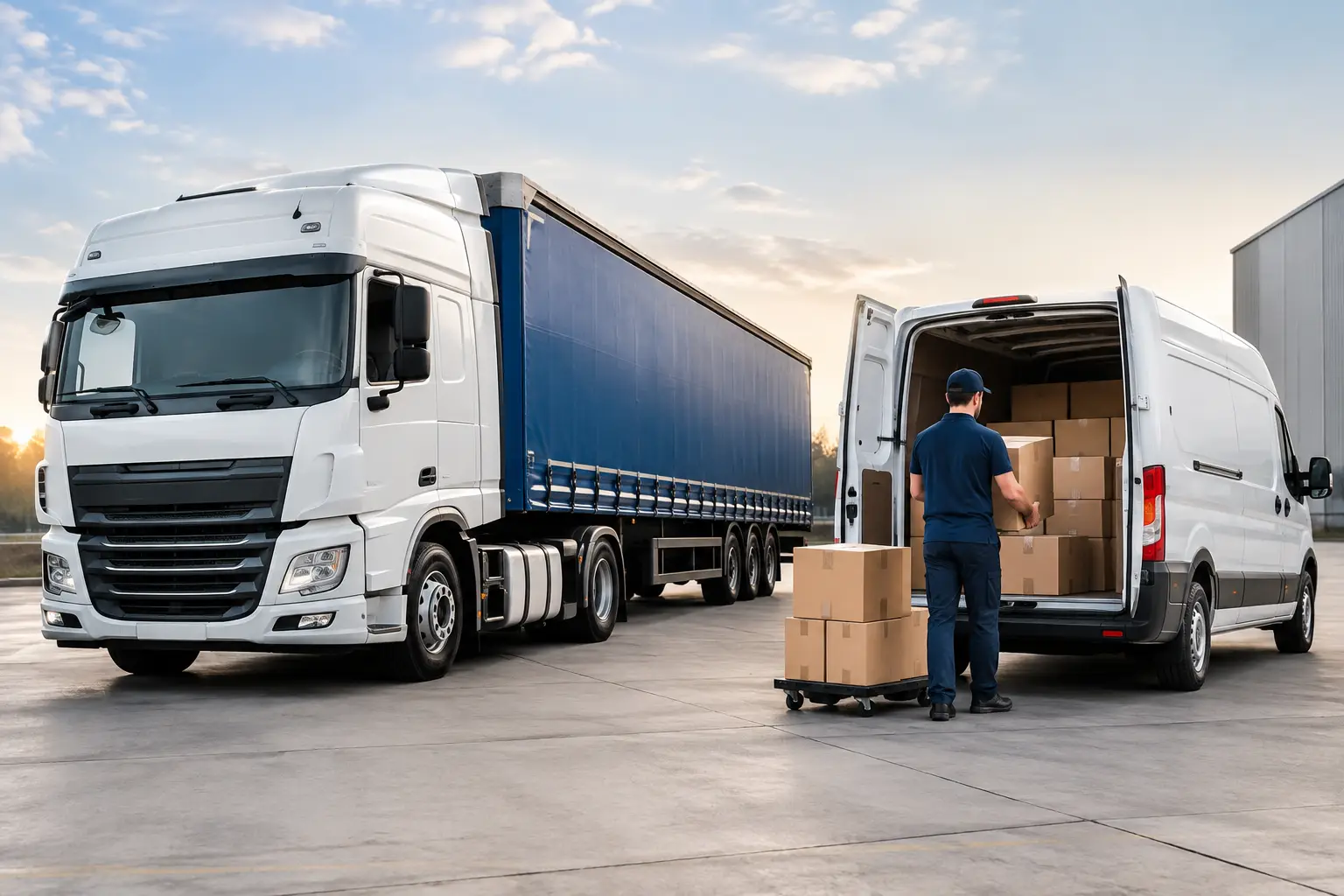
Both services move goods around the UK, often using similar vehicles. The difference lies in how the job is planned and delivered. Haulage generally suits planned freight movements and larger loads. A dedicated courier service is designed for consignments that need immediate collection, direct transport and accountable delivery from one vehicle.
What is haulage?
Haulage is the movement of freight, usually by road, from one location to another. It is commonly used for palletised goods, regular stock replenishment, building materials, machinery and larger commercial loads. A haulier may operate anything from vans to articulated lorries, depending on the load and route.
For a business sending several pallets to a distribution centre on a planned date, haulage can be a sensible and economical choice. Loads may be consolidated with other customers’ freight, transported through hubs or depots, and delivered within an agreed service window rather than at a precise time.
That model works well when time is flexible and the goods are suited to standard freight handling. It is less suitable when a consignment cannot be rehandled, must arrive at a specific hour, or needs someone to take ownership of the journey from collection to delivery.
What is a dedicated courier service?
A dedicated courier collects your consignment in a vehicle assigned solely to that delivery. The driver travels directly to the destination, without adding other collections, deliveries or depot transfers along the way.
This is often described as same-day courier or dedicated transport. It is not limited to envelopes and small parcels. Depending on the provider and fleet, it can cover a fragile prototype in a small van, exhibition equipment in a Luton van, long materials on a flatbed, or machinery requiring a larger lorry with specialist loading equipment.
The value is in control. You know which vehicle is carrying the item, when it was collected, where it is during the journey and who has received it. For urgent, high-value or awkward consignments, that direct route removes many of the weak points found in multi-drop and network-based delivery.
Haulage versus courier: the practical differences
The right choice usually comes down to urgency, handling and certainty rather than a simple distinction between a lorry and a van.
Speed and delivery commitment
Haulage services often operate to scheduled collection and delivery windows. Freight may be booked days in advance and delivered on a next-day, economy or timed basis, depending on the service. This is effective for planned supply-chain movements where a receiving depot can accept delivery during normal hours.
A dedicated courier is built for more immediate requirements. Collection can be arranged promptly, with the vehicle travelling straight to the delivery point. That makes it the stronger option when a site is waiting, a deadline cannot move, or a delayed item will cause costly downtime.
A same-day service does not automatically mean every journey is faster in terms of road miles. It means your delivery is not waiting for enough freight to fill a route, sitting in a depot or being held behind a sequence of other stops. The journey is organised around your consignment.
Handling and risk of damage
Standard freight networks are highly capable, but they rely on repeatable processes. Goods may be loaded, unloaded, scanned, sorted and transferred between vehicles. For well-packaged, regular pallets, this is usually appropriate.
Every additional handling point creates another opportunity for delay, loss or damage. That matters when transporting glass, artwork, print materials, delicate equipment, bespoke joinery or items with an unusual shape. It also matters when packaging cannot protect the contents from repeated movement.
With a dedicated courier, the consignment is loaded once, secured for its journey and delivered from the same vehicle. The driver can be briefed on the item, its loading requirements and the receiving contact. This is a practical safeguard, not simply a premium feature.
Vehicle choice
Haulage is often chosen because a load is large, heavy or palletised. But large or unusual does not always mean a shared freight service is the best fit. A single oversized item may need a dedicated vehicle precisely because it cannot sit safely alongside other freight.
A transport provider should match the vehicle to the consignment, not force the consignment into the nearest available vehicle. Small vans suit documents, samples and compact urgent parts. Luton vans can carry larger boxed goods and display materials. Curtain-sided vehicles, flatbeds, sliding-roof lorries and vehicles with mounted forklifts can solve access and loading problems that a standard van cannot.
Before booking, consider the full job: dimensions, weight, loading method, collection and delivery access, whether a forklift is available, and whether the item can be safely tied down. These details prevent the costly situation where the right goods arrive with the wrong vehicle.
Cost and value
Shared haulage is usually more cost-effective for non-urgent freight because the carrier spreads vehicle and route costs across multiple consignments. If your delivery can travel on a planned service and tolerate handling through a network, that saving may be entirely worthwhile.
Dedicated courier transport costs more per journey because the vehicle, driver and route are reserved for you. However, the transport price should be weighed against the consequence of failure. A missed installation slot, idle workforce, delayed press run or replacement of damaged stock can quickly cost more than a direct delivery.
The most useful question is not, “Which is cheapest?” It is, “What would delay, damage or uncertainty cost this job?” For routine freight, the answer may point to haulage. For a business-critical consignment, the answer often points to a dedicated courier.
When haulage is likely to be the right choice
Haulage is a good fit when the delivery is planned, the goods are securely palletised or standardised, and the receiver can work with a delivery window. It is particularly practical for regular movements between warehouses, replenishment stock, bulk materials and non-urgent commercial freight.
It can also suit businesses with predictable volumes. A scheduled transport arrangement allows operations teams to plan stock movement efficiently and avoid paying for urgent transport where it is not needed.
That said, ask how the service handles exceptions. If a pallet contains a time-sensitive component, if the delivery point has restricted access, or if the goods must not be rehandled, a standard haulage booking may no longer provide the right level of protection.
When a dedicated courier is the safer decision
Choose dedicated transport where the delivery has a fixed deadline, needs collection now, or requires careful handling beyond a parcel or pallet network. It is especially useful for high-value equipment, fragile items, site-critical materials, confidential documents and consignments with non-standard dimensions.
Direct delivery is also valuable where communication matters. A named collection contact, real-time tracking, delivery updates and proof of completion give operational teams the information they need to keep customers, site managers and colleagues informed.
For Essex businesses delivering into London, across Suffolk or anywhere else in the UK, local collection capability combined with national direct transport can make an urgent job far easier to manage. Redhead Couriers operates this one-vehicle, one-delivery model, matching vehicles and trained drivers to consignments that need more than a standard network can offer.
Ask these questions before you book
A suitable transport service should be able to answer practical questions clearly. Can the consignment be collected within the required timeframe? Will it stay on one vehicle? Is the vehicle appropriate for its dimensions and weight? How will it be secured, tracked and handed over? Can the delivery be made at the required time and under the site’s access restrictions?
If the answer depends on “best endeavours” or a broad delivery window, be honest about whether the job can absorb that uncertainty. A lower-cost option is only good value when its service level matches the risk.
The best transport decision protects the work behind the delivery. Give the provider accurate dimensions, weight, photographs where helpful, collection and delivery contacts, and any access or handling requirements. With the right information, the right vehicle can be sent first time – and your consignment can arrive tracked, safe and on time.