
A server, control panel or prototype can look securely packed when it leaves site, then arrive unusable after one sharp impact, a wet loading bay or an unplanned vehicle transfer. Knowing how to protect sensitive electronics means controlling the whole journey, not simply adding more bubble wrap. For urgent or high-value equipment, the vehicle, loading method, route and delivery process matter just as much as the box.
Why sensitive electronics need more than standard parcel protection
Electronic equipment is vulnerable in ways that are not always visible. A cracked casing is obvious, but vibration can loosen internal connections, static electricity can damage components, and sudden temperature changes can create condensation inside equipment. Screens, circuit boards, laboratory instruments, AV equipment, servers and specialist control units all need their own handling plan.
Standard parcel networks are designed for volume. That can mean conveyor belts, sorting hubs, multiple vehicle movements and several handling points before final delivery. It is efficient for ordinary cartons, but each transfer introduces another opportunity for an item to be dropped, stacked incorrectly or exposed to unsuitable conditions.
Where downtime, replacement cost or a missed installation slot would create a larger problem, direct transport is usually the safer choice. A dedicated vehicle collects the consignment and takes it straight to its destination. Fewer hands involved means fewer risks to manage.
How to protect sensitive electronics before collection
The best transport arrangements cannot compensate for poor preparation. Start by considering what the equipment needs to remain safe, rather than choosing packaging based only on what is available in the store cupboard.
Use packaging that prevents movement
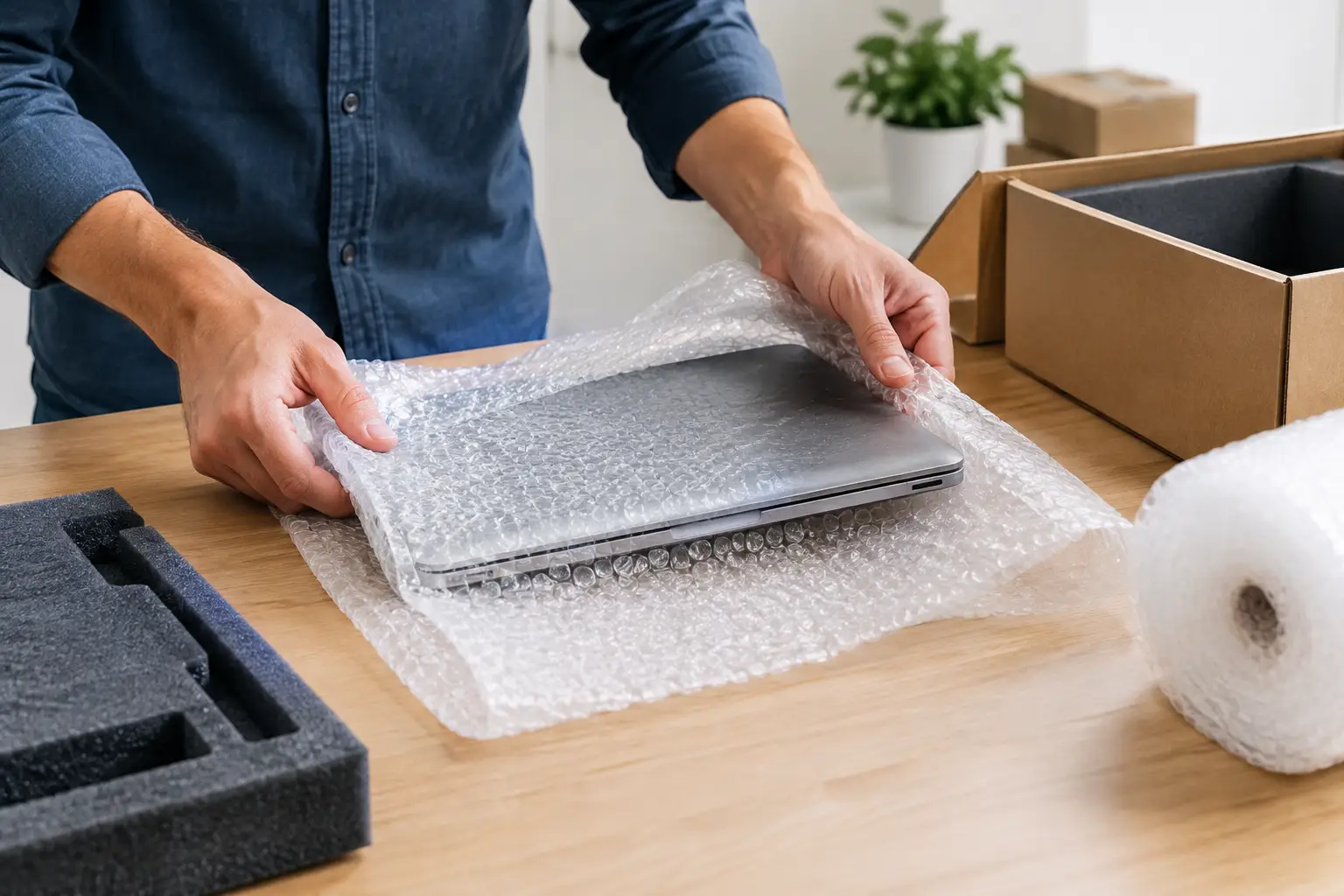
The goal is not to fill a carton with soft material. It is to stop the item shifting inside it while protecting it from impact. Use the original manufacturer packaging where possible, particularly for monitors, servers, medical equipment and precision instruments. It was designed around the equipment’s weight, shape and vulnerable areas.
If original packaging is unavailable, use a double-wall carton or purpose-built flight case that is appropriate for the weight. Fit dense foam inserts around the item so it cannot move, paying particular attention to corners, ports, screens and protruding controls. Loose-fill packaging may be suitable for light accessories, but it is rarely enough for valuable electronics on its own.
Heavy equipment needs a crate, stillage or palletised solution that supports its full weight. Avoid placing a heavy unit into a box designed for light goods simply because it fits. The carton may fail during lifting, and the unit can then suffer a damaging drop.
Control static, moisture and temperature
Circuit boards, drives and components can be affected by electrostatic discharge. Place loose electronic parts in anti-static bags before adding protective packaging. Ordinary plastic bags are not a substitute where static-sensitive components are involved.
Moisture needs similar attention. Seal equipment in protective bags if it may be exposed to rain during loading or unloading, and use desiccant where appropriate for longer journeys or temperature-sensitive equipment. If a consignment has moved from a cold vehicle into a warm building, allow it to reach room temperature before it is powered up. This reduces the risk of condensation causing a fault.
For particularly sensitive equipment, tell the transport provider about acceptable temperature limits before collection. A vehicle can be matched to the job, but only if the requirements are known in advance.
Keep cables, accessories and records together
Remove detachable leads, mounts and batteries where safe to do so, then pack and clearly label them separately within the same consignment. A missing power supply or data cable can delay an installation just as effectively as damaged equipment.
Photograph the item before it is packed, record serial numbers and keep a packing list with the shipment. These steps support accountability and make it easier for the receiving team to check that everything has arrived. For high-value equipment, do not put full product descriptions or values on external labels where they can attract unwanted attention.
Choose the right vehicle and loading method
A well-packed case can still be damaged if it slides across a van floor or is loaded beneath an unstable item. The vehicle should suit the consignment, not the other way around.
Small, lightweight electronics may travel safely in a clean, dry van with secure floor restraints. Larger racks, production equipment or crated systems may require a larger vehicle, tail lift, pallet truck or mounted forklift. Awkward loads can need additional protection, careful weight distribution and a loading plan before the driver arrives.
Before booking, provide accurate dimensions, weight, collection and delivery access details. Mention stairs, narrow entrances, loading bays, forklift availability and any requirement for a two-person lift. These details determine whether the right vehicle and equipment are sent from the outset.
The load should be positioned where it cannot move under braking or cornering. It should be secured with appropriate straps or restraints, protected from contact with other cargo and kept away from liquids, loose tools or unsecured pallets. Electronics should never be treated as filler around a larger load.
Direct delivery reduces avoidable risk
For sensitive electronics, every depot transfer is a decision to accept more handling. A multi-drop service may work for non-urgent, low-value accessories, particularly when cost is the main factor. It is less suitable for equipment that needs to arrive at a fixed time, must stay upright, cannot be stacked or requires careful handover.
A one-vehicle, one-delivery service gives the sender greater control. The equipment is collected, loaded once and transported directly to the named destination. There are no sorting depots, no unplanned transfers and no other delivery stops competing for the driver’s attention.
This matters when equipment is heading to a site installation, a client presentation, a print deadline, a production line repair or an event. The delivery is not merely a transport task. It is part of a wider operation with people waiting, premises booked and work scheduled around its arrival.
Redhead Couriers provides dedicated same-day transport for consignments where direct handling, real-time tracking and accountable delivery are required. The right service is confirmed by discussing the item, its urgency and the practicalities at both ends of the journey.
Give the driver clear handling instructions
Clear instructions prevent assumptions. Mark packaging with necessary handling requirements such as “This Way Up”, “Do Not Stack” or “Keep Dry”, but do not rely on labels alone. Explain the requirements when booking and make sure the collection contact knows what the driver needs to collect.
For critical consignments, confirm whether the equipment must remain upright, whether it can be tilted, who is authorised to sign, and whether a timed arrival is essential. Let the courier know if delivery is to a secure office, construction site, studio, hospital department or restricted-access location. The destination can affect route planning, vehicle choice and unloading arrangements.
A reliable handover also needs a named recipient and proof of delivery. Tracking gives useful visibility during the journey, while a completion record confirms that the equipment reached the correct person at the agreed location.
Build a sensible contingency plan
Some risks cannot be packed away. Traffic incidents, site closures and a recipient who is unexpectedly unavailable can all affect a delivery. A specialist transport provider should be told what to do if access is refused, the site contact cannot be reached or the delivery window changes.
For a major installation or time-critical repair, arrange collection early enough to allow for realistic road conditions. Same-day delivery can be fast, but a requested arrival time should be planned around distance, loading requirements and access restrictions rather than best-case journey times. If equipment is irreplaceable or extremely valuable, discuss enhanced security, insurance expectations and any collection verification process before it leaves your premises.
The safest shipment is the one where packaging, vehicle, driver instructions and delivery timing all support the same outcome: equipment that arrives ready to use. When the item cannot be replaced easily and the deadline cannot move, direct control of its journey is worth far more than a cheaper service with more handling points.