
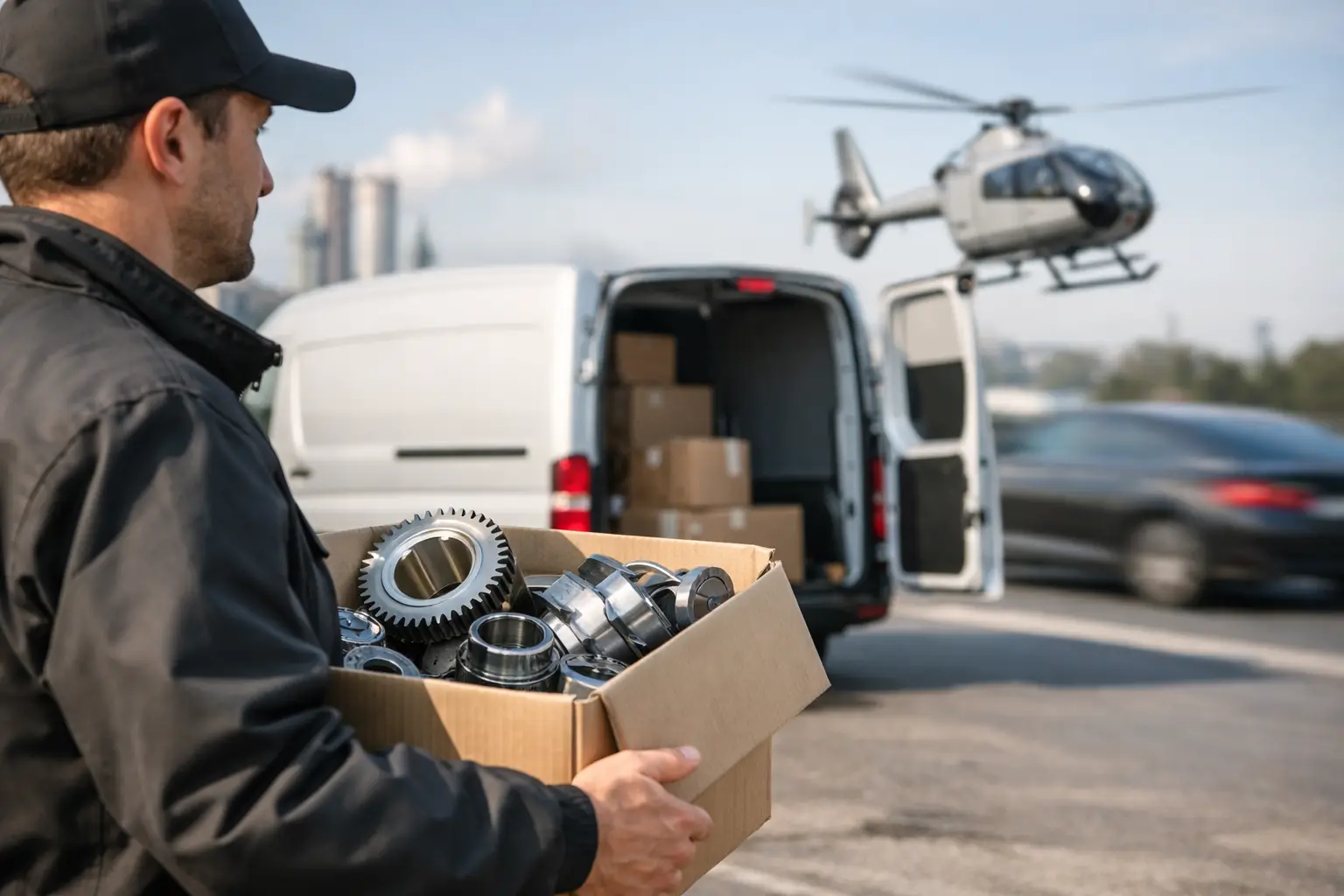
A production line can be waiting on one bearing, control panel, mould tool or machined component. When it is, the cost is not measured only in the price of the part. Labour is standing by, deadlines move closer and a customer may be waiting for finished goods that cannot leave the site.
A manufacturing parts courier UK service should give operations teams a clear answer to that problem: the right vehicle arrives promptly, the part is loaded with care, and it travels directly to the engineer, factory or supplier that needs it. No depot transfer. No multi-drop route. No uncertainty over where a critical component is sitting.
Why standard networks can create risk for manufacturing parts
Parcel and pallet networks are built to move high volumes efficiently. They are a sensible option for routine, well-packaged goods with flexible delivery windows. But their process usually involves hub sorting, handling by several teams and delivery routes with multiple consignments. That is a risk when a part is required before a shift can restart.
A delayed gearbox may be only one item among thousands in a network. To the manufacturer waiting for it, it is the item that determines whether output resumes. The same applies to replacement machine guards, fabricated sections, tooling, samples for approval and essential electrical components.
There is also the handling question. Parts may be heavy, awkwardly shaped, vulnerable to knocks or unsuitable for stacking. A bespoke item can be irreplaceable at short notice. Sending it through a conventional network may save money on the initial booking, but it can create a much higher cost if it arrives late or damaged.
Dedicated transport works differently. One vehicle collects your consignment and takes it straight to the delivery point. The driver remains responsible for that load from collection through to proof of delivery. That direct control is especially valuable where timing, condition and delivery instructions matter as much as speed.
What a manufacturing parts courier in the UK should provide
The most useful courier is not simply the fastest available. It is the provider that asks the practical questions before dispatching a vehicle. What are the dimensions and weight? Does the part need protection from movement? Is there a forklift at either end? Is the site accessible to a larger vehicle? Who will receive it, and by what time?
Those details decide whether a small van, long-wheelbase vehicle or lorry is the right choice. They also prevent common collection-day problems, such as a driver arriving without the load capacity or equipment needed to complete the job safely.
For urgent manufacturing movements, look for four essentials:
- Immediate collection when a breakdown or shortage cannot wait.
- A dedicated vehicle carrying only your consignment to its destination.
- Real-time tracking and direct communication throughout the journey.
- Trained drivers who understand secure loading, careful handling and site delivery requirements.
A fixed delivery time is often as important as same-day arrival. An engineer may be booked to attend a customer site at 3pm, or a factory may have a narrow receiving window before security closes. Timed delivery gives the receiving team confidence to plan labour and access around the vehicle’s arrival rather than waiting for an all-day estimate.
Matching the vehicle to the part
Manufacturing businesses rarely move one type of item. A small urgent sensor may need collecting from a supplier in London and delivered to a production facility in Essex. The next job may involve a crated motor, a long fabricated rail or a machine component that requires mechanical assistance to unload.
Vehicle choice should reflect the consignment rather than force the consignment into a standard service. A small van may be ideal for compact, high-value components. Larger vans provide space for secured crates and engineering equipment. For substantial loads, a 7.5-tonne, 18-tonne or 26-tonne lorry may be required, particularly where quantity, weight or dimensions exceed van capacity.
Specialist equipment can matter just as much. A sliding-roof vehicle can make loading from above practical where a crane is available. A mounted forklift can support delivery to sites without unloading equipment. These options need arranging in advance, but they remove delays that can otherwise occur at the final and most critical stage of the delivery.
There is a trade-off. A larger or specialist vehicle may cost more than a standard van, and availability can be tighter at peak times. Yet choosing too small a vehicle or relying on unsuitable site equipment risks a failed collection, a damaged load or a missed delivery slot. A transport consultant should help you make the sensible choice based on the actual job, not a generic tariff.
Direct delivery protects more than the schedule
For manufacturers, a component in transit may carry sensitive information as well as commercial value. Prototype parts, bespoke tooling, unreleased product samples and customer-owned equipment should not be passed between multiple depots or left waiting for onward collection.
A one-vehicle, one-delivery model reduces handling points and keeps responsibility clear. It also allows specific instructions to travel with the job. Perhaps the consignment must be kept upright, protected from weather, delivered to a named engineer or signed for by a particular department. The driver can work to those instructions rather than hoping they survive a chain of sorting labels and handovers.
Tracking provides another layer of control. It gives the dispatching team an accurate view of progress and lets the receiving site prepare for arrival. If road conditions affect the route, prompt communication allows managers to make informed decisions rather than chase a customer service queue for an update.
This is not only for breakdowns. Scheduled dedicated transport can support regular supplier collections, inter-site stock transfers, outbound finished components and deliveries to subcontractors. Businesses with recurring movements often benefit from an account arrangement that records their usual collection points, delivery requirements and vehicle preferences. When an urgent call comes in, less time is spent explaining the basics.
Planning for the jobs that cannot go wrong
The strongest transport plan is made before the line stops. Review the parts that would cause the greatest disruption if unavailable and identify their suppliers, weights, packaging requirements and likely delivery locations. Keep current contact details for both dispatch and receiving teams, including out-of-hours numbers where appropriate.
It also helps to agree what counts as urgent. Some parts need a vehicle on site within the hour. Others can be scheduled for a precise next-day arrival, which may offer more vehicle choice and lower cost. Separating genuine emergencies from planned replenishment helps protect budget without compromising production.
At collection, provide accurate information. State whether the item is loose, palletised, crated or unusually shaped. Confirm its weight and dimensions, and flag any sharp edges, fragile finishes or lifting requirements. If there are access restrictions, security procedures or a limited unloading window, say so at the point of booking. Clear information lets the courier protect the job from the start.
Redhead Couriers supports manufacturers with dedicated same-day and scheduled transport across Essex, Suffolk, London and the UK, using vehicles matched to the consignment and delivery requirement. The focus is straightforward: tracked, safe transport with direct accountability from collection to completion.
When a vital part is holding up production, the right question is not simply, “Who can deliver this?” Ask who can collect it safely, keep control of it throughout the journey and place it in the right hands when the clock matters. That is the reassurance a manufacturing operation needs when every minute counts.