
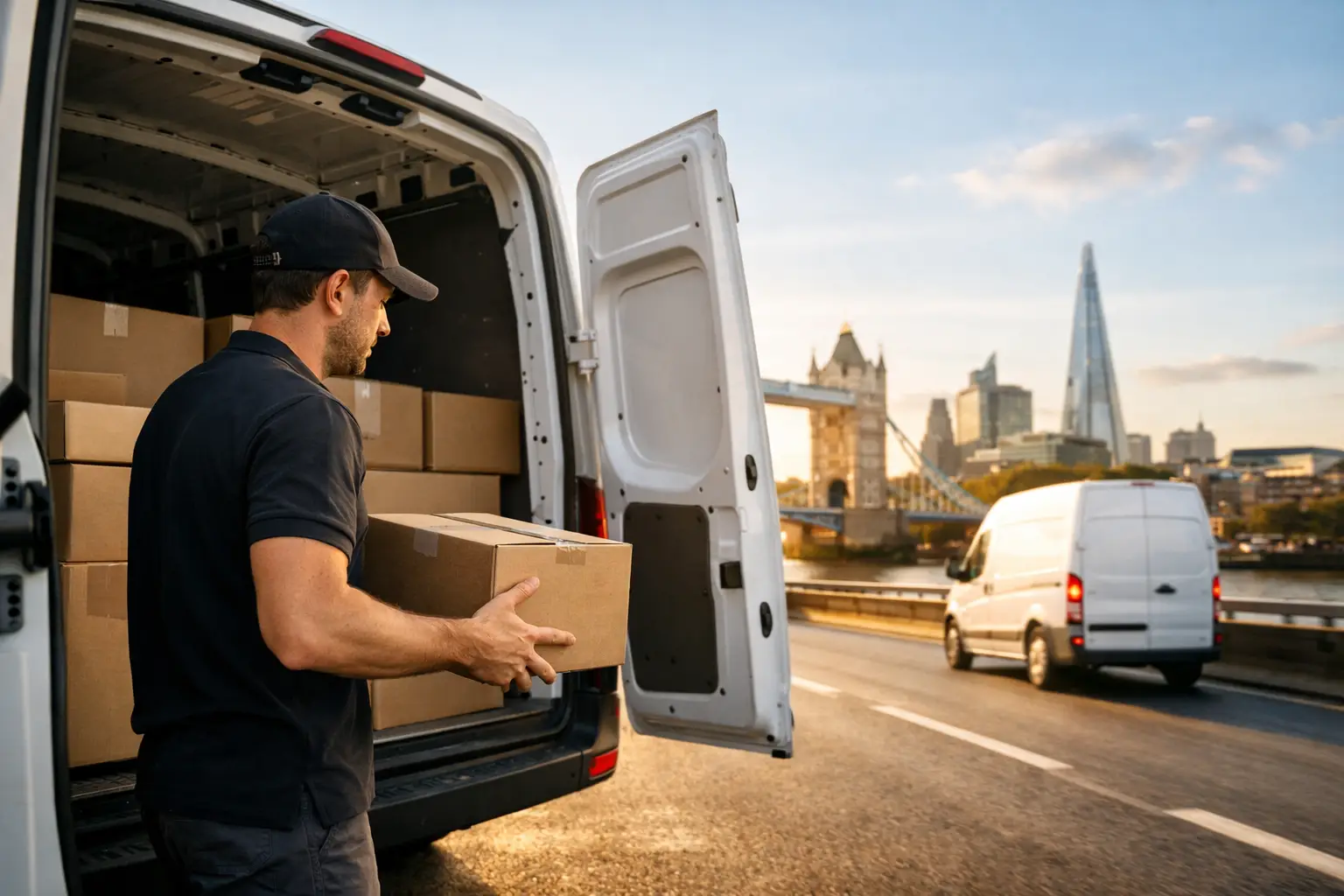
A dedicated courier service UK businesses can depend on is not simply a faster way to send a parcel. It is a controlled transport solution for consignments where a missed deadline, an extra handling point or the wrong vehicle could create a costly problem. Your item is collected by one vehicle and taken directly to its destination – with no depot transfers, no multi-drop route and no uncertainty over who is responsible for it.
For urgent documents, production-critical parts, exhibition materials, fragile displays and oversized equipment, that control matters. The delivery is planned around the consignment and the required arrival time, rather than being fitted into a standard network.
What makes a dedicated courier service different?
Standard parcel and pallet networks are designed for volume. A consignment may pass through several hubs, be loaded alongside numerous other items and be handled by different teams before it reaches the recipient. That model is efficient for routine freight, but it is not always suitable for something valuable, awkward, time-sensitive or irreplaceable.
A dedicated courier operates differently. One trained driver collects your goods, secures them in a suitable vehicle and travels directly to the delivery point. The consignment stays under controlled handling from collection through to proof of delivery.
This approach gives you a clearer chain of custody and a more dependable delivery window. It also allows the transport plan to reflect the realities of the job: access restrictions, site booking times, loading requirements, the need for a timed call before arrival or a recipient who must sign personally.
When dedicated transport is the right choice
Dedicated delivery is often chosen when the cost of getting it wrong is greater than the cost of a direct vehicle. A construction team waiting for a specialist component, for example, may lose far more through idle labour and programme delays than it spends on urgent transport. A print deadline, legal filing or shop fit-out can be equally unforgiving.
It is particularly well suited to consignments that are:
- needed the same day or at a precise booked time
- high-value, confidential or difficult to replace
- fragile, unusually shaped, long or heavy
- required at a site with specific delivery procedures
- too important to risk through a multi-drop network
Private customers can benefit too. A valuable artwork, antique, family heirloom or large item may need the same careful assessment of vehicle space, loading method and direct journey. The item does not need to be commercially valuable to deserve proper protection.
Urgent parts and manufacturing supplies
A stopped production line or delayed repair cannot always wait for a next-day carrier. Direct collection and delivery keeps the journey focused on the part that is needed, whether it is travelling from Essex to London, Suffolk to the Midlands or across the UK. Live tracking and regular communication help operational teams make informed decisions while the delivery is underway.
Construction, shop fitting and site deliveries
Sites are rarely straightforward. There may be restricted access, delivery slots, a named contact, safety rules or a requirement for suitable unloading equipment. A dedicated service can match the vehicle to the load and discuss those details before collection, rather than discovering a problem at the gate.
For larger or awkward consignments, a lorry with a sliding roof or mounted forklift may be the practical answer. The right vehicle is not an upgrade for its own sake – it is what prevents damage, failed delivery attempts and unnecessary handling on site.
Advertising, publishing and events
Campaign materials, point-of-sale displays, exhibition stands and printed work often have fixed launch dates. They may also be vulnerable to crushing, moisture or poor stacking. Direct transport means the driver is working to one delivery requirement, not balancing your consignment against a route of unrelated stops.
Vehicle matching protects the delivery
A dedicated courier should begin by understanding what is being moved. Dimensions, weight, packaging, collection access and delivery access all affect the correct vehicle and loading plan. A small van may be ideal for urgent documents or compact components, while a long, fragile display may require considerably more space and a different method of restraint.
A capable fleet should cover vehicles from small vans through to 26-tonne lorries, with specialist options available when the job demands them. Choosing a vehicle that is too small can lead to poor loading and avoidable delays. Choosing one that is unnecessarily large may add cost and make access more difficult. Practical advice at the booking stage is part of protecting the consignment.
This is also where a transport consultant adds value. They can ask the questions a booking form may miss: Does the item need to remain upright? Is there a forklift at either end? Can the destination receive a vehicle of that size? Is a tail lift useful, or does the delivery need a mounted forklift? Those answers turn a general request into a workable plan.
Direct does not mean communication stops at collection
The most reassuring delivery is one you can follow. Real-time tracking allows customers to see progress without chasing for updates, while clear contact with the transport team gives them a route to confirm changes or share site information. At delivery, proof of completion provides a record that the goods reached the right person at the agreed location.
That visibility is especially useful when several teams are involved. A buyer may arrange the collection, a site manager may receive it and a client may be waiting for confirmation. With a dedicated service, everyone can work from a clearer picture of where the consignment is and when it will arrive.
There is still a trade-off to consider. A direct vehicle is normally more expensive than a standard next-day network because the vehicle and driver are committed to your job. For non-urgent, well-packaged goods with flexible delivery dates, a conventional carrier may be perfectly sensible. Dedicated transport earns its place where timing, handling and accountability cannot be left to chance.
How to book the right dedicated courier service UK-wide
A useful booking conversation should cover more than collection and delivery postcodes. Be ready to provide the dimensions and approximate weight of the consignment, the nature of the goods, the latest acceptable delivery time and any handling requirements. Mention stairs, narrow access, loading bays, booking references, site inductions and whether someone needs to be called before arrival.
If your organisation sends urgent or specialised consignments regularly, an account arrangement can make repeat bookings faster and more consistent. The transport provider learns your usual locations, contacts and requirements, while your team has an established point of contact when a last-minute issue arises.
Redhead Couriers supports businesses and private customers with direct, UK-wide transport built around one vehicle to one important delivery. Its owned and operated fleet, trained drivers and hands-on transport advice are designed for consignments that need more care than a standard network can offer.
The questions worth asking before you commit
Before choosing a provider, ask whether the vehicle is dedicated solely to your consignment, whether there will be any depot handling and how delivery progress will be communicated. Confirm who will collect and deliver the goods, what proof of delivery will be supplied and how the provider will deal with a change to access or timing.
It is also sensible to ask about fleet suitability, driver training and compliance. A provider operating to FORS Silver standards and able to work within ULEZ requirements demonstrates practical readiness for London and wider urban deliveries, but the most relevant measure remains whether it understands the specific journey in front of it.
When a delivery carries a deadline, a reputation or a project forward, the safest option is usually the one with the fewest handovers. Share the full requirement early, choose the vehicle that fits the job and keep the journey direct from collection to recipient.