
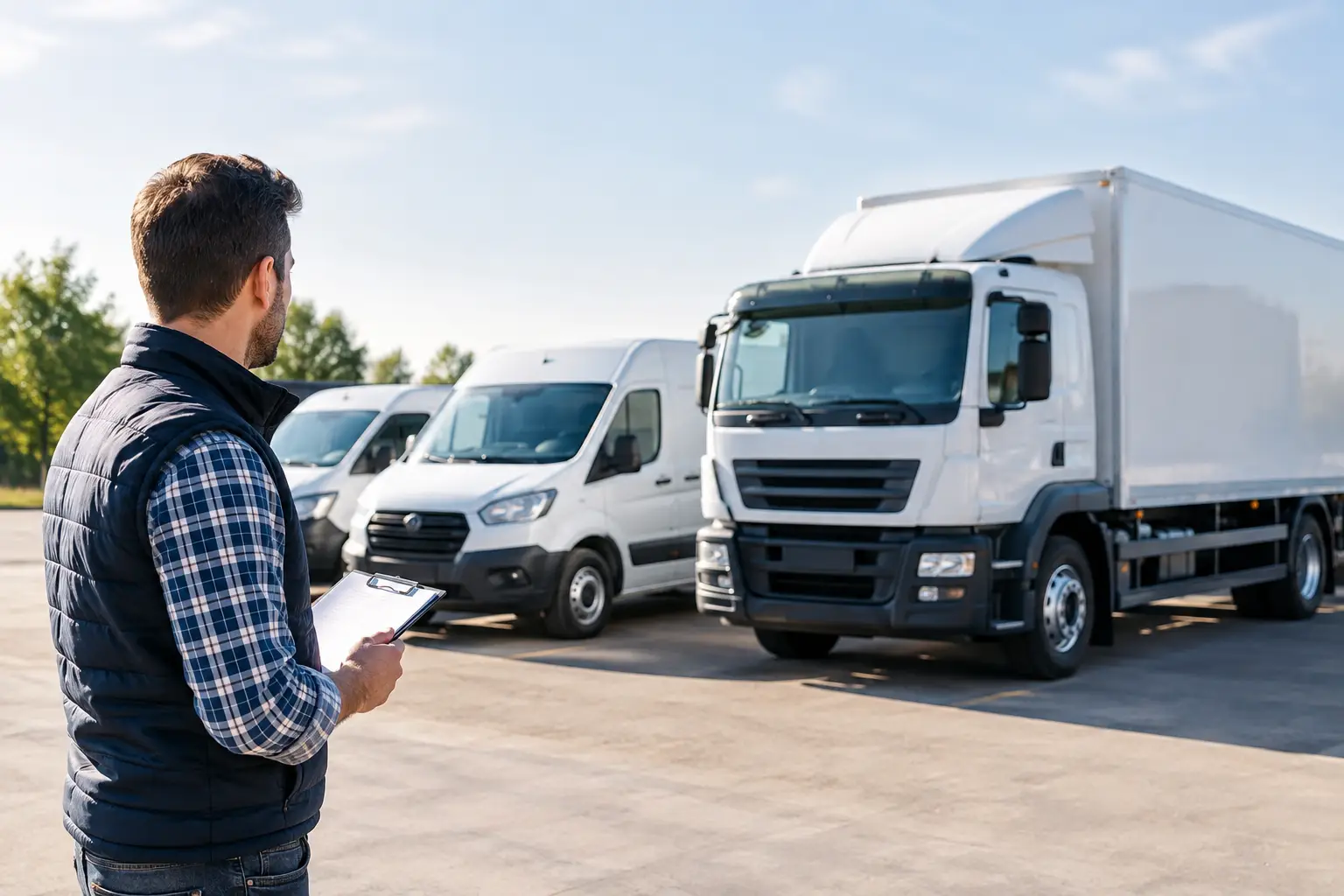
A delivery can fail long before the driver sets off. The wrong vehicle may be too small for the load, too tall for the site, unable to protect a fragile item or simply unsuitable for a fixed delivery time. Knowing how to choose a delivery vehicle means looking beyond the journey distance and matching the vehicle to the consignment, collection point and receiving site.
For an urgent component, exhibition stand, legal file, machine part or valuable one-off item, the right decision protects more than the goods. It protects production schedules, site teams, customer commitments and your reputation. A dedicated vehicle gives you control: one collection, one vehicle and one direct delivery, without the depot transfers and multi-drop handling that introduce risk.
Start with the consignment, not the postcode
The first question is not “how far is it going?” It is “what exactly needs moving?” Record the length, width, height and weight of every item, including packaging, pallets, stillages and any protective materials. A delivery that fits on paper can become unworkable when a crate is taller than the van’s loading height or too wide to pass through the side door.
Weight matters, but dimensions often decide the vehicle. Long materials, shop-fitting units and awkwardly shaped equipment may be light enough for a small van yet require a long-wheelbase vehicle or curtain-sided lorry because of their length. Equally, a compact but dense item may need a vehicle with enough payload rather than extra load space.
Be clear about whether the goods can be stacked, laid flat, secured upright or placed on top of other items. Fragile printed materials, artwork, glazed panels and precision equipment may need a clear load area, careful strapping and protection from movement. If there is any uncertainty, provide photographs and measurements before booking. Good transport advice begins with an accurate picture of the load.
How to choose a delivery vehicle by load size
A broad fleet gives you options, but each vehicle type has a practical role. A small van is often right for documents, samples, boxes, small parts and compact urgent consignments. It is easier to park in busy town centres, can access many restricted locations and is often the most efficient choice when space is not the issue.
A short-wheelbase or long-wheelbase van suits larger cartons, multiple boxes, display materials and equipment that needs a protected enclosed space. For many same-day business deliveries, this is the useful middle ground: enough room for a substantial consignment without sending a larger vehicle than the job requires.
When goods are palletised, tall, particularly heavy or difficult to load, a Luton van may be more appropriate. Its box body provides useful load volume and a tail lift can make collection and delivery safer where no loading dock is available. The tail lift is not an afterthought. If the sender or recipient cannot lift a heavy pallet safely, it may be essential.
For bulky machinery, large site materials, long stock, exhibition builds or substantial pallet quantities, move up to a lorry. A 7.5-tonne, 18-tonne or 26-tonne vehicle can provide the payload, deck length and loading arrangement that a van cannot. Specialist options such as sliding roofs and mounted forklifts can also remove problems that would otherwise delay the job.
Choosing the smallest suitable vehicle is usually sensible, but not at the expense of safe loading or secure transport. A tightly packed van with no room to protect a delicate consignment is a false economy. Leave enough capacity for correct restraint, safe unloading and the possibility that the stated dimensions are slightly optimistic.
Check collection and delivery access early
The vehicle must fit both ends of the journey. A 26-tonne lorry may be ideal for the load but unsuitable for a narrow lane, low bridge, residential road, city-centre restriction or constrained loading bay. A vehicle that can reach the collection site may not be able to reach the destination.
Ask practical questions before confirming the booking. Is there a height barrier or low canopy? Does the driver need to reverse into a yard? Is there a loading dock, forklift or pallet truck on site? Are there booking-in rules, security gates, timed access slots or a named contact who must be present?
Access affects the unloading method too. A pallet can only be taken off safely if the right equipment and ground conditions are available. A tail lift may solve the height difference, but it cannot safely operate on a steep slope, uneven surface or soft ground. Where the recipient has no handling equipment, a vehicle with a mounted forklift may be the better answer.
In central London and other controlled areas, route and vehicle compliance also matter. ULEZ requirements, delivery restrictions and congestion can affect timing and cost. An experienced transport provider will plan around these details rather than discovering them when the vehicle is already at the gate.
Decide how much handling your consignment can tolerate
Standard parcel and pallet networks are designed for volume. Goods may be collected with other consignments, moved through depots, sorted, reloaded and delivered as part of a route. That model can work well for routine, non-urgent items packed to withstand repeated handling.
It is less suitable when the delivery is high value, fragile, confidential, unusually shaped or required at a specific time. Every transfer adds another handling point and another opportunity for delay or damage. If the consequence of failure is a stopped production line, missed installation, cancelled event or disappointed client, direct transport is often the safer choice.
A dedicated same-day service keeps the consignment in one vehicle from collection to delivery. The driver collects it, secures it and takes it directly to the destination. That is particularly valuable for delicate equipment, legal documents, time-sensitive print, replacement parts and goods that cannot be left in a depot overnight.
Security should be considered in the same way. Ask who handles the goods, whether the journey can be tracked and how delivery is confirmed. Real-time tracking and proof of delivery provide visibility, but they also give your team a clear answer when a customer asks where an urgent item is.
Match the vehicle to the deadline
Urgency changes the transport decision. If the goods must arrive today, tomorrow before 10 am or at an exact site slot, a standard service window may not be enough. You need a vehicle that can collect promptly and travel directly, with a realistic route plan and a driver who understands the importance of the deadline.
A timed delivery is not just about driving faster. It depends on collection readiness, loading time, traffic, driver hours, access restrictions and the recipient being available. Build in the details that help the driver succeed: collection reference, contact numbers, opening times, gate instructions and any requirement for identification or PPE.
For recurring deliveries, the best vehicle may vary by day or job. A manufacturer may need a small van for urgent spare parts, a Luton for packaged assemblies and an articulated solution for scheduled site deliveries. A transport partner should help you select the right vehicle each time rather than forcing every consignment into a fixed service.
Give your courier the information that prevents problems
The quality of the booking information affects the quality of the delivery. Before arranging collection, have these details ready:
- Exact dimensions, weight and number of items, including packaging or pallets.
- Clear photographs of anything fragile, oversized or unusually shaped.
- Collection and delivery addresses, contacts, opening times and access instructions.
- The required arrival time, not simply the date.
- Loading and unloading equipment available at each location.
- Any handling, security, confidentiality or delivery-proof requirements.
This information lets a transport consultant identify risks before they become expensive delays. It also means the driver arrives with the right vehicle, the right equipment and a clear plan.
Do not let price alone choose the vehicle
The cheapest quote can be the right choice for a straightforward, well-packed delivery with flexible timing. But it is rarely the right measure for a critical consignment. Compare what is actually included: direct delivery or multi-drop routing, collection speed, tracking, insurance arrangements, loading support, vehicle suitability and proof of completion.
A larger vehicle may cost more than a small van, while a dedicated journey may cost more than a network service. The relevant comparison is the cost of getting the delivery right against the cost of damaged goods, downtime, a missed site slot or an employee spending hours chasing an uncertain consignment.
For businesses moving urgent, fragile or complex loads across Essex, London and the UK, Redhead Couriers can assess the consignment and recommend a suitable dedicated vehicle. The aim is straightforward: the goods are collected safely, carried directly and delivered on time.
The best delivery vehicle is the one that gives your consignment enough space, protection and access without adding avoidable cost or risk. Share the full picture early, and the transport decision becomes far simpler.