
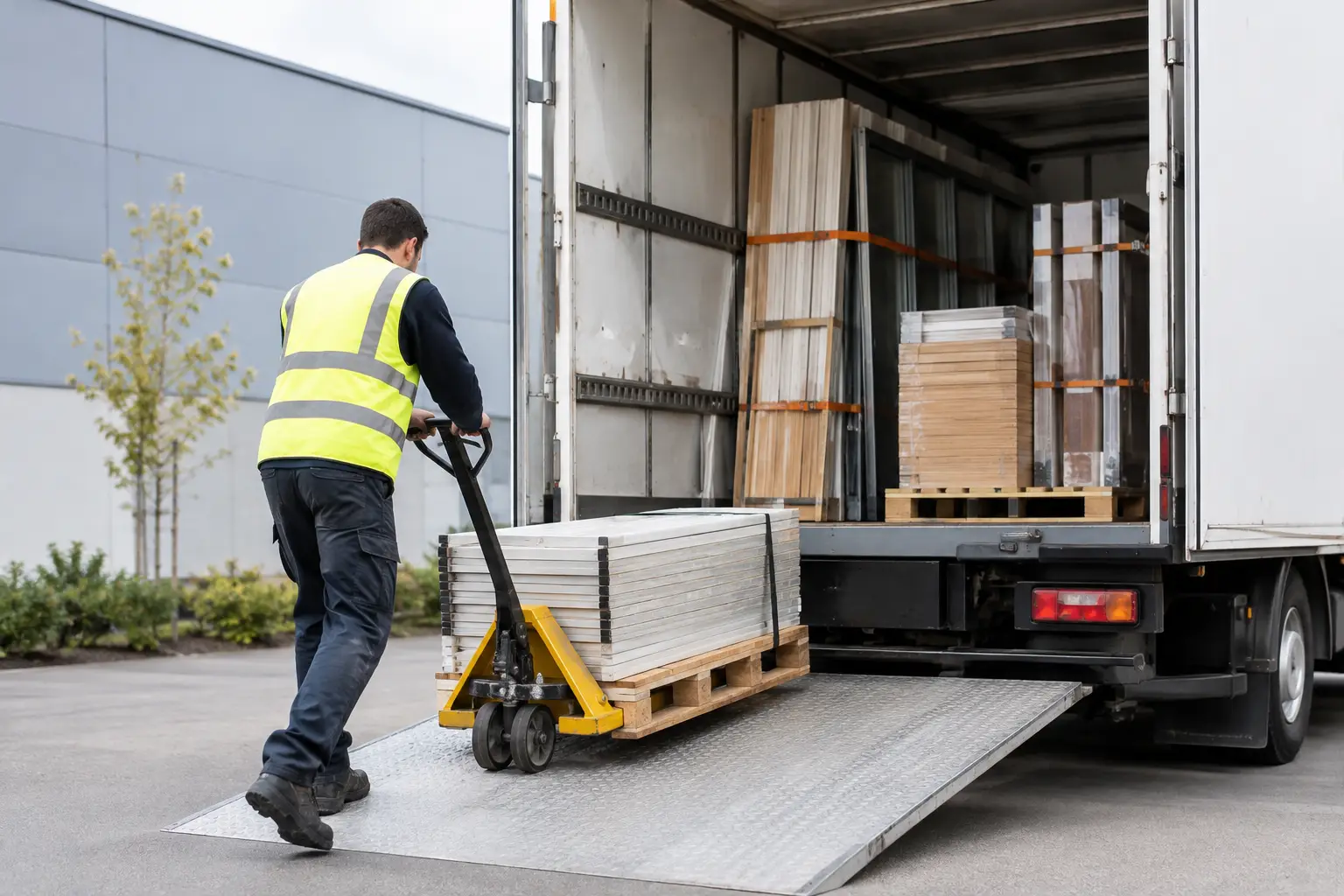
A shopfitting delivery can look straightforward on paper, then become the reason an installation team is standing idle at 7am. One missing glazing panel, dented display unit or delayed section of shelving can hold up a store opening, create costly rebooking work and put pressure on a carefully planned programme. Knowing how to transport shopfitting materials properly means treating every load as part of the installation, not simply as freight.
Shopfitting consignments rarely suit a standard parcel or pallet network. They are often long, fragile, high-value, awkwardly shaped and needed at a precise time. The safest approach is to plan the collection, vehicle, loading method and delivery point around the materials themselves.
How to transport shopfitting materials without disruption
Start by assessing the consignment as a whole, rather than judging it by the number of boxes. A single project may include flat-packed counters, timber or metal displays, glass, lighting, vinyl graphics, joinery, flooring, fixtures and fitting tools. Each item has different risks in transit, and the order in which it is unloaded matters just as much as its condition on arrival.
Measure the longest, widest and tallest items, including protective packaging. Record the overall weight where possible, but also identify concentrated weights such as stone worktops, steel frames or loaded tool cases. This allows the transport provider to select a vehicle with sufficient payload, internal length and access for safe loading.
The collection and delivery addresses deserve the same attention. A retail park may have a rear loading bay and easy vehicle access, while a high street unit may involve narrow streets, timed access restrictions, basement routes or a strict out-of-hours delivery window. Confirm who will receive the load, whether a forklift or site labour is available, and how far materials must travel from the kerb or bay to the unit.
A detailed brief prevents the most common avoidable problems: the wrong van arriving, materials loaded in the wrong order, or a driver reaching site without a workable unloading plan.
Match the vehicle to the materials and site
Vehicle choice is central to safe, efficient shopfitting transport. Sending a load in a vehicle that is too small can lead to poor stacking, unsecured overhangs and repeat journeys. Sending an unnecessarily large lorry can create access problems at constrained sites. The right answer depends on the dimensions, weight, handling requirements and delivery environment.
Smaller vans can work well for urgent fittings, boxed hardware, graphics, samples and tools. Long-wheelbase or Luton vans are often better for display components, flat-packed furniture and long packaged sections that must remain dry and protected. For larger projects, curtain-sided vehicles, 7.5-tonne lorries and 26-tonne lorries provide the space and payload for bulkier joinery, racking or multiple store fixtures.
Specialist equipment can remove risk where conventional loading is impractical. A mounted forklift can be valuable for heavy pallets or sites without handling equipment. A sliding-roof vehicle may be the sensible choice for crane loading or unusually tall items. These are not extras to decide on at the last minute. They should be considered before the vehicle is booked, particularly where an installation date cannot move.
Protect fragile and finished surfaces
Shopfitting materials are often manufactured to a precise finish. A minor scratch on a painted counter, polished metal trim or glazed panel can make an item unusable in a customer-facing space. Good packaging is therefore about more than preventing breakage. It protects the standard of the finished installation.
Keep glass, mirrors and decorative panels upright in suitable stillages or A-frames where possible. They should be restrained so they cannot shift, lean or make contact with harder materials. Do not place loose items against glass simply because there appears to be space in the vehicle.
Finished joinery, counters and cabinetry need edge protection, corner guards and clean blankets or padded covers. Avoid loading them directly against abrasive metal, timber with exposed fixings or dirty flooring. If pieces are stackable, follow the manufacturer’s instructions rather than assuming that a sturdy-looking carton can bear weight.
Long lengths of aluminium, timber, signage or shelving require support at more than one point. Unsupported lengths can flex in transit and suffer damage that only becomes visible during installation. Secure them with appropriate straps and protective padding, without overtightening straps against vulnerable edges or finished faces.
Load in delivery order, not collection order
A safe load is not necessarily a practical load. On a shopfitting site, the team may need floor protection, tools, fixings and key structural components first, with final display pieces and fragile finishes available later. If the first-needed materials are buried at the front behind a full vehicle load, unloading becomes slower and increases handling.
Before loading, agree the unloading sequence with the site manager or installation lead. Group materials by area, phase or store department where that will help the team. Clearly labelled packages save time, but labels need to be visible when the goods are in the vehicle, not hidden against a sidewall.
Weight distribution also matters. Place heavier, stable items low down and evenly across the load area, then secure them before lighter or more fragile goods are added. Use load bars, straps, blankets and protective packing as appropriate. Nothing should be free to slide, roll or topple during braking and cornering.
It is worth taking a quick condition record before departure, particularly for high-value components or materials with visible finishes. Photographs and a clear loading check give everyone a reliable reference if questions arise later.
Choose direct transport for deadline-critical work
Multi-drop networks are designed for volume, not for the controlled movement of specialist materials. A consignment may be transferred between depots, sorted alongside unrelated freight and loaded several times before it reaches site. Every extra handling point creates another opportunity for delay, loss or damage.
For a store refit, pop-up launch or phased installation, dedicated transport offers greater control. One vehicle collects the materials and takes them directly to the required destination. There are no depot transfers, no unrelated deliveries ahead of yours and no uncertainty about which vehicle holds the consignment.
This model is especially useful when materials are unusually shaped, fragile or needed the same day. It also makes communication simpler: the driver, transport team and customer are working to one delivery plan. Real-time tracking and direct updates allow the site team to prepare for arrival rather than chasing a generic delivery estimate.
Redhead Couriers provides this one-vehicle, one-delivery approach for shopfitters and contractors who need materials collected, handled carefully and delivered to site on time across the UK.
Plan access, timing and handover
A perfectly loaded vehicle can still fail at the final stage if it arrives outside the site’s permitted window or cannot access the unloading point. Confirm delivery times with the site contact, including whether security needs a vehicle registration, driver name or booking reference in advance.
Check for height barriers, weight limits, London restrictions, pedestrianised streets and loading-bay rules. If the premises are inside a shopping centre, establish the service-yard entrance, goods-in procedure and permitted delivery hours. A driver should not be left trying to locate a site entrance while an installation crew waits inside.
For timed deliveries, allow for the realities of the route. Traffic, roadworks and major event restrictions can affect travel time, particularly around London and busy town centres. A dedicated transport provider can build suitable contingency into the schedule, but only when the deadline and site restrictions are known from the start.
At handover, count packages and inspect obvious damage before the vehicle leaves where practical. Obtain proof of delivery from the authorised recipient and report any issue immediately. Fast, clear reporting gives the best chance of resolving a shortfall before it affects the next installation task.
When a same-day collection is the right decision
Not every shopfitting job needs express transport. Scheduled delivery may be the sensible, cost-effective choice when materials are ready in advance and the delivery slot is flexible. However, same-day dedicated transport is often the right call when a supplier has completed an item late, a critical component has been left at another site, or damaged stock must be replaced before a handover.
The trade-off is straightforward: urgent, dedicated transport costs more than a standard network service, but that cost can be far lower than an idle installation team, a postponed opening or a return visit for multiple contractors. The decision should be based on the operational impact of being without the materials, not just the price of the journey.
The best shopfitting deliveries are rarely noticed because the right items arrive in the right order, in the right condition, exactly when the site needs them. Give the transport plan the same care as the installation plan, and the materials have every chance of arriving tracked, safe and ready to fit.